
Towards the end of last year there was a letter published in Private Eye with the writer's name adding a final note. This has evoked a flood of letters of the same kind; they now appear in every issue in a section entitled Pseudo Names. Here is a selection:
We feel there should be a Pseudo Names song—perhaps to the tune of one of those 1960s novelty numbers.
ANNIE TZIBITZI
DEAN E. WEANEY
E. LO POLKER
DOT B. KEANEY
Please do not stop the silly names correspondence. Man, it rocks!
STU FORDER-SHOW
FREDA GETREADY
ANNA GOKATGO
Would you consider reviving the full column in time for Easter?
THERESA GREENHILL
FARAH WHEY
Only one Pseudo Name in the current Eye; the end of this juvenile rubbish is in sight—heaven be praised!
HAL A. LOOYER
Please don't leave the Pseudo Names feature without a home this Christmas.
A. WAY
IAN A. MANGER
NOAH CRIBB-FAWE
A. BED
Will there be a special Christmas edition of Pseudo Names? We certainly hope so.
DEE
HOLLY
ANDY
IVY
Pseudo Names will not be over until the fat lady has sung the last carol.
CY LENT-KNIGHT
HOLLY KNIGHT
ALISSA CALM
ALICE BRYTE
I was delighted to see Pseudo Names published in your Christmas edition. For me it was the icing on the tree.
MICK SMETAFORS
Pseudo Names, along with Malapropisms and Spoonerisms, should be consigned to the garbage can of history.
LYNN BINER
We were wondering if earlier correspondents could ever have imagined that their letters would result in such a long-running and popular feature.
LUKE WATT
HUGH STARTED
Being German, your English humour I find hard to understand. I hope that there are no hidden meanings that would trigger litigation.
ALICE INORDNUNG
Here in Ulm, I am one of the few people to understand your English way of thinking.
COUNT von SELF-LUKKI
Though I love it to bits and look forward to its appearance, I'm not at all sure what the highly cultured Chinese would make of your Pseudo Names section.
RHODA BORROCKS
Do you think it is due to state censorship that we haven't received Private Eye for two months here in Beijing?
Y.R. WEE-WEI TING
We heartily approve of Pseudo Names going international.
STEPHANIE WRIGHT
DEREK SHUN
It has been a very cold winter here. I should have stayed at home.
S. KEYMOE-NELLE
Of course, it is universally recognised that German Pseudo Names are the best.
DOT SCHLAND
HUGH BERALLES
Re the claim that German Pseudo Names are the best, is it not just typical of the Boche to claim superiority?
ALAIN ZONFONT
DELLA PAT RHEA
We do hope that you will not allow correspondents using false names to slip in subliminal political messages, thus undermining your tradition of political independence.
DAVE SAWINNER
GORDON MUSSGOE
Some say that we need a leader who combines the best qualities of Gordon Brown and Margaret Thatcher.
BRUNHILDE
Showing posts with label quotations. Show all posts
Showing posts with label quotations. Show all posts
Thursday, 13 May 2010

Sunday, 14 February 2010
Valentine
On this day in 2006 I wrote about the three third-century martyrs with this name but omitted to mention the interesting fact that that the martyrdom of one of them was accomplished by scraping him to death with oyster shells. Anyway, not much is known about these saints and the modern practice of coming over all soppy on February 14th has nothing to do with any of them.
For this reason I do not find this festival as depressing as most of the others we are obliged to observe. Who could resent being given tokens of love, provided they demonstrate not merely affection but also good taste and knowledge of one's inclinations? Thus, this year's offerings gave me much pleasure: a little book of unhackneyed quotations (e.g. "You will understand that I should like to say many fine and striking things to you, but it is rather difficult, all at once, in this way. I regret this all the more as you are sufficiently great to inspire one with romantic dreams of becoming the confidant of your beautiful soul...." - Marie Bashkirtseff to Guy de Maupassant, 1884). Rather well put, I thought.
And there were chocolates (praline and truffle). I had three for breakfast, together with a Metformin tablet.
 They were of course heart-shaped, an accepted symbolism on these occasions. But nowadays the conventional heart is not the only way of representing the organ: Froog, the Beijing bon vivant, discovered some other charming examples, including these, alleged to be anatomically correct.
For this reason I do not find this festival as depressing as most of the others we are obliged to observe. Who could resent being given tokens of love, provided they demonstrate not merely affection but also good taste and knowledge of one's inclinations? Thus, this year's offerings gave me much pleasure: a little book of unhackneyed quotations (e.g. "You will understand that I should like to say many fine and striking things to you, but it is rather difficult, all at once, in this way. I regret this all the more as you are sufficiently great to inspire one with romantic dreams of becoming the confidant of your beautiful soul...." - Marie Bashkirtseff to Guy de Maupassant, 1884). Rather well put, I thought.
And there were chocolates (praline and truffle). I had three for breakfast, together with a Metformin tablet.
 They were of course heart-shaped, an accepted symbolism on these occasions. But nowadays the conventional heart is not the only way of representing the organ: Froog, the Beijing bon vivant, discovered some other charming examples, including these, alleged to be anatomically correct.
Sunday, 20 September 2009
Goldwyn apocrypha*
Yes, I know you've heard them all before and that there are dozens more. The chances are that he never said many of them, or that if he did he knew exactly what he was saying.
A verbal agreement isn't worth the paper it's written on.
Anybody who goes to a psychiatrist ought to have his head examined.
Don´t talk to me while I´m interrupting.
Go see it, and see for yourself why it shouldn't be seen.
I don't want any yes-men around me. I want everybody to tell me the truth even if it costs them their jobs.
I had a monumental idea this morning, but I didn't like it.
If I could drop dead right now, I would be the happiest man alive.
If we do not succeed, we run the risk of failure.
If you don't disagree with me, how will I know I'm right?
If you want something for free, you have to pay for it.
I'll give you a definite maybe.
In two words: im-possible.
Include me out.
It´s more than magnificent. It´s mediocre.
It´s spreading like wildflowers.
Let's have some new clichés.
Never make predictions, especially about the future.
Spare no expense to save money on this one.
Tell me, how did you love my movie?
The scene is dull. Tell him to put more life into his dying.
This makes me sore, it gets my dandruff up.
We've all passed a lot of water since then.
We´re overpaying him, but he´s worth it.
Do you want me to put my head on a moose?
When I want your opinion I'll give it to you.
Why should people go out and pay to see bad movies when they can stay at home and see bad television for nothing?
You're going to call him William? What kind of a name is that? Every Tom, Dick and Harry is called William.
*[What you probably didn't know is that to use the word in this sense you have to be a Protestant, or at any rate not a Catholic.]
A verbal agreement isn't worth the paper it's written on.
Anybody who goes to a psychiatrist ought to have his head examined.
Don´t talk to me while I´m interrupting.
Go see it, and see for yourself why it shouldn't be seen.
I don't want any yes-men around me. I want everybody to tell me the truth even if it costs them their jobs.
I had a monumental idea this morning, but I didn't like it.
If I could drop dead right now, I would be the happiest man alive.
If we do not succeed, we run the risk of failure.
If you don't disagree with me, how will I know I'm right?
If you want something for free, you have to pay for it.
I'll give you a definite maybe.
In two words: im-possible.
Include me out.
It´s more than magnificent. It´s mediocre.
It´s spreading like wildflowers.
Let's have some new clichés.
Never make predictions, especially about the future.
Spare no expense to save money on this one.
Tell me, how did you love my movie?
The scene is dull. Tell him to put more life into his dying.
This makes me sore, it gets my dandruff up.
We've all passed a lot of water since then.
We´re overpaying him, but he´s worth it.
Do you want me to put my head on a moose?
When I want your opinion I'll give it to you.
Why should people go out and pay to see bad movies when they can stay at home and see bad television for nothing?
You're going to call him William? What kind of a name is that? Every Tom, Dick and Harry is called William.
*[What you probably didn't know is that to use the word in this sense you have to be a Protestant, or at any rate not a Catholic.]
Monday, 10 November 2008
"Comment"
From Dorothy Parker's Not So Deep as a Well (1937):
Oh, life is a glorious cycle of song,
A medley of extemporanea;
And love is a thing that can never go wrong;
And I am Marie of Romania.
 Marie Alexandra Victoria made the most of being Queen of Romania in the first half of the twentieth century. She was the daughter of the then Duke of Edinburgh and thus a grand-daughter of Queen Victoria and great-grand-daughter of Tsar Alexander II. Her husband King Ferdinand was a Hohenzollern, but she retained her Englishness from first to last, though she did take the trouble to learn Romanian. Her persuasive gifts brought Romania into the First World War on the side of France and Britain and she went to war herself as a Red Cross nurse. She published several books, was a fine horsewoman and was said to be fabulously beautiful.
She died in 1938 and is honoured among Romanians to this day.
Oh, life is a glorious cycle of song,
A medley of extemporanea;
And love is a thing that can never go wrong;
And I am Marie of Romania.

 Marie Alexandra Victoria made the most of being Queen of Romania in the first half of the twentieth century. She was the daughter of the then Duke of Edinburgh and thus a grand-daughter of Queen Victoria and great-grand-daughter of Tsar Alexander II. Her husband King Ferdinand was a Hohenzollern, but she retained her Englishness from first to last, though she did take the trouble to learn Romanian. Her persuasive gifts brought Romania into the First World War on the side of France and Britain and she went to war herself as a Red Cross nurse. She published several books, was a fine horsewoman and was said to be fabulously beautiful.
She died in 1938 and is honoured among Romanians to this day.
Saturday, 1 December 2007
The Use Of the Five Fingers
Writing about my itchy ear the other day reminded me of a very old Jewish joke. It is not easy to write down because it calls for actions, but I will try.
“Moshe, soon you will have your bar mitzvah and you will become a man. Before then I must teach you all the things that a Jewish man needs to know, and I will start today by telling you the use of the five fingers.”
“Yes, Papa”.
“Now, the first finger is the thumb, which is called the Introduction Finger”...[Extends a thumb and twists his wrist from left to right and back again.] “...Mr Cohen, Mr Levy. Mr Levy, Mr Cohen.”
"Then, the second finger is the Warning Finger...” [Extends a forefinger and wags it up and down.] “...Don’t you try to cheat me!”.
"The third finger is the Reassurance Finger...” [Taps his chest with his middle finger.] “...You think that I would try to cheat you?”
“And lastly, there is the Admiration Finger...” [Slips his fourth finger under an imaginary lapel and slides it up and down.] “...That’s a nice bit of cloth you’ve got there!”
“…And that, my son, is what you need to know about the use of the five fingers.”
“But Papa, that is only four fingers. What about the other one?”
“Oh well, Moshe… I don't know... I don’t think that’s got any special use….” [Looks thoughtful while poking his little finger in his ear and wiggling it about].
“Moshe, soon you will have your bar mitzvah and you will become a man. Before then I must teach you all the things that a Jewish man needs to know, and I will start today by telling you the use of the five fingers.”
“Yes, Papa”.
“Now, the first finger is the thumb, which is called the Introduction Finger”...[Extends a thumb and twists his wrist from left to right and back again.] “...Mr Cohen, Mr Levy. Mr Levy, Mr Cohen.”
"Then, the second finger is the Warning Finger...” [Extends a forefinger and wags it up and down.] “...Don’t you try to cheat me!”.
"The third finger is the Reassurance Finger...” [Taps his chest with his middle finger.] “...You think that I would try to cheat you?”
“And lastly, there is the Admiration Finger...” [Slips his fourth finger under an imaginary lapel and slides it up and down.] “...That’s a nice bit of cloth you’ve got there!”
“…And that, my son, is what you need to know about the use of the five fingers.”
“But Papa, that is only four fingers. What about the other one?”
“Oh well, Moshe… I don't know... I don’t think that’s got any special use….” [Looks thoughtful while poking his little finger in his ear and wiggling it about].
Sunday, 19 August 2007
Sound advice
Other Men's Flowers contains very few biblical quotations, because I know that most of my regular readers are familiar with the Bible and consult it frequently, so that for me to regurgitate chunks of it would be supererogatory and regarded as impertinent. However, even among the devout there are very few who take much notice of its injunctions, believing that most of them are irrelevant to modern life. No-one really needs to be reminded not to covet his neighbours oxen, or that looking back when your hand is on the plough may disqualify you for the kingdom of God. I mean, nowadays we all bear these thoughts constantly in mind.
However, when it comes to general recommendations the word of God is often quite sensible, and we would do well to heed it. Take, for example, Matthew 6, 28-31:
And why take ye thought for raiment? Consider the lilies of the field, how they grow; they toil not, neither do they spin:
And yet I say unto you, That even Solomon in all his glory was not arrayed like one of these.
Wherefore, if God so clothe the grass of the field, which today is, and tomorrow is cast into the oven, shall he not much more clothe you, O ye of little faith?
Therefore take no thought, saying, What shall we eat? or, What shall we drink? or, Wherewithal shall we be clothed?
Today’s obsessions with diet, booze and fashion demean us all, and this is undoubtedly salutary advice, rather well put.
However, when it comes to general recommendations the word of God is often quite sensible, and we would do well to heed it. Take, for example, Matthew 6, 28-31:
And why take ye thought for raiment? Consider the lilies of the field, how they grow; they toil not, neither do they spin:
And yet I say unto you, That even Solomon in all his glory was not arrayed like one of these.
Wherefore, if God so clothe the grass of the field, which today is, and tomorrow is cast into the oven, shall he not much more clothe you, O ye of little faith?
Therefore take no thought, saying, What shall we eat? or, What shall we drink? or, Wherewithal shall we be clothed?
Today’s obsessions with diet, booze and fashion demean us all, and this is undoubtedly salutary advice, rather well put.
Saturday, 16 September 2006
A brace of Thesigers
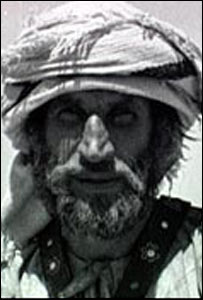 Looking in the Oxford Dictionary of National Biography for something on the great explorer Wilfred Thesiger I drew a blank and was disappointed to find that his biography will not be included until the January 2007 update. He was 93 when he died in 2003 and one would have thought that they could have been ready to slip him in without hanging about so long, but apparently this is not how their publishing programme works.
But, as so often happens with reference book browsing, the search led me to an unrelated entry which gave me much pleasure.
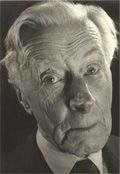 For years I have enjoyed the performances, usually brief cameos, of the actor Ernest Thesiger, who specialised in grotesques such as the cadaverous tycoon in The Man in the White Suit, the mad scientist in Bride of Frankenstein and the Duc de Berri in Olivier’s Henry V. He appeared in nearly 60 films and had a distinguished stage career from 1909.
But from the ONDB and elsewhere I learnt more about him, in particular that he had been a notable eccentric. He was a great friend (and crochet partner) of Queen Mary and was thought to have based his appearance in a later drag role on her. It is said that he used to lay lilies at the feet of the handsome doorman at the Savoy Hotel in London.
In 1914 he attempted to join a Highland regiment because he rather fancied himself in the kilt, but finally went to France as a private with the Queen Victoria Rifles, taking his needlework with him. In 1945 he published a book entitled “Adventures in Embroidery”.
Alec Guinness relates in his journal that Thesiger was once stopped whilst walking down Piccadilly by a woman who asked him, "Didn't you used to be Ernest Thesiger?", to which he replied "Still am!" and hurried on.
Actually the ONDB biography is rather pedestrian and omits many of the jollier stories about him, in particular his famous comment (sometimes attributed to others) when asked about his wartime experience in the trenches:
My dear, the noise! And the people!
Saturday, 13 May 2006
We English
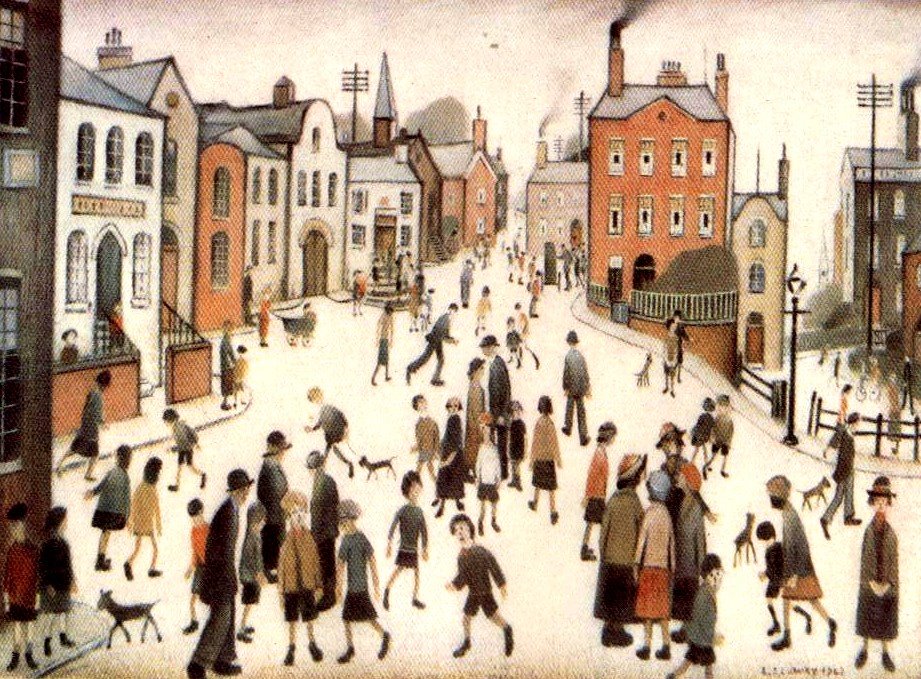 SATURDAY AFTERNOON: A Derbyshire Village. L.S.Lowry, 1943
 In a post about warm beer a couple of years ago I commented on some of George Orwell’s much misquoted remarks about the characteristics of the English which he made in a 1941 essay called The Lion and the Unicorn.
I have just been re-reading a book he published in 1947 called The English People which goes into much more detail about what he considered to be the defining features of Englishness as they might be observed by an unprejudiced foreigner. It is interesting, nearly sixty years later, to look at those he chose, and to decide which are as accurate today as they were then and which are no longer true. Here is a selection of both kinds, unsorted:
• The language of the BBC is barely intelligible to the masses.
• The tall, lanky physique which is traditionally English is almost confined to the upper classes: the working classes, as a rule, are rather small and with a tendency among the women to grow dumpy in early middle life.
• [A foreign observer] …would find the salient characteristics of the English common people to be artistic insensibility, gentleness, respect for legality, suspicion of foreigners, sentimentality about animals, hypocrisy, exaggerated class distinctions and an obsession with sport.
• Except for certain well-defined areas in half a dozen big towns there is very little crime or violence.
• There is a general feeling that the law will be scrupulously administered, that a judge or magistrate cannot be bribed, and that no-one will be punished without trial.
• Almost never is any major honour bestowed on anyone describable as an intellectual.
• For perhaps a hundred and fifty years, organised religion, or conscious religious belief of any kind, have had very little hold on the mass of the English people.
• A tendency to support the weaker side merely because it is weaker is almost general in England; hence the admiration for a “good loser” and the easy forgiveness of failures, either in sport, politics or war.
• They will refuse even to sample a foreign dish … they regard such things as garlic and olive oil with disgust, life is unlivable to them unless they have tea and puddings.
• Poetry, the art in which England has above all others excelled, has for more than a century had no appeal whatever for the common people … indeed the very word “poetry” arouses either derision or embarrassment in ninety-eight people out of a hundred.
• At this moment the mass of the English people are mildly republican. But it may well be that another long reign, similar to that of George V, would revive royalist feeling and make it—as it was between roughly 1880 and 1936—an appreciable factor in politics.
• Imported labourers with low standards of living, such as the Irish, are greatly looked down on.
• The man of obviously upper-class appearance can usually get more than his fair share of deference from commissionaires, ticket-collectors, policemen and the like.
• It is the only European country where internal politics are conducted in a more or less humane and decent manner.
• Except for a handful of “self-made men” and Labour politicians, those who control our destinies are the product of about a dozen public schools and two universities.
[A very few of these comments may have been inaccurate then and remain so. Even Orwell, acute observer and honest critic that he was, didn’t always get it right, as we can now see. But on almost everything he was more nearly right than any of his contemporaries.]
I have just been re-reading a book he published in 1947 called The English People which goes into much more detail about what he considered to be the defining features of Englishness as they might be observed by an unprejudiced foreigner. It is interesting, nearly sixty years later, to look at those he chose, and to decide which are as accurate today as they were then and which are no longer true. Here is a selection of both kinds, unsorted:
• The language of the BBC is barely intelligible to the masses.
• The tall, lanky physique which is traditionally English is almost confined to the upper classes: the working classes, as a rule, are rather small and with a tendency among the women to grow dumpy in early middle life.
• [A foreign observer] …would find the salient characteristics of the English common people to be artistic insensibility, gentleness, respect for legality, suspicion of foreigners, sentimentality about animals, hypocrisy, exaggerated class distinctions and an obsession with sport.
• Except for certain well-defined areas in half a dozen big towns there is very little crime or violence.
• There is a general feeling that the law will be scrupulously administered, that a judge or magistrate cannot be bribed, and that no-one will be punished without trial.
• Almost never is any major honour bestowed on anyone describable as an intellectual.
• For perhaps a hundred and fifty years, organised religion, or conscious religious belief of any kind, have had very little hold on the mass of the English people.
• A tendency to support the weaker side merely because it is weaker is almost general in England; hence the admiration for a “good loser” and the easy forgiveness of failures, either in sport, politics or war.
• They will refuse even to sample a foreign dish … they regard such things as garlic and olive oil with disgust, life is unlivable to them unless they have tea and puddings.
• Poetry, the art in which England has above all others excelled, has for more than a century had no appeal whatever for the common people … indeed the very word “poetry” arouses either derision or embarrassment in ninety-eight people out of a hundred.
• At this moment the mass of the English people are mildly republican. But it may well be that another long reign, similar to that of George V, would revive royalist feeling and make it—as it was between roughly 1880 and 1936—an appreciable factor in politics.
• Imported labourers with low standards of living, such as the Irish, are greatly looked down on.
• The man of obviously upper-class appearance can usually get more than his fair share of deference from commissionaires, ticket-collectors, policemen and the like.
• It is the only European country where internal politics are conducted in a more or less humane and decent manner.
• Except for a handful of “self-made men” and Labour politicians, those who control our destinies are the product of about a dozen public schools and two universities.
[A very few of these comments may have been inaccurate then and remain so. Even Orwell, acute observer and honest critic that he was, didn’t always get it right, as we can now see. But on almost everything he was more nearly right than any of his contemporaries.]
Sunday, 18 December 2005
Goodwill to all men, for four weeks only
At this time of year, if you repel chuggers they may hit you with: "But it's Christmas!"
From an essay by Nicholas Fearn in The Guardian...the plight of the poor and needy is no worse at Christmas than at any other time...There is something profoundly mistaken in our acceptance that morality can take the form of a holiday. After all, the real holiday here is the 11 months of the year when it is more or less acceptable to look after number one, yet no-one talks of an extended "season of selfishness"...
...If there is such a thing as a season of goodwill that begins officially on a certain day, ushered in by a wave of televised celebrity appeals for charity, there must of necessity be another day, some time between Christmas Day and New Year, when all this comes to an official end. We wait in vain for newsreaders to announce the relaxation of festive requirements and a return to our default stinginess...
...Christmas is not the only manifestation of our irrational observance of "seasons": for example, you shouldn't make someone cry on their birthday; you should be especially kind to your partner on Valentine's Day; annoying people is fine on April Fools' Day, as is terrorising them at Halloween...
...The Season of Goodwill does more than merely highlight the lack of fellow feeling that is the norm throughout the rest of the year, it also works to make it permissible. The question of how much we should give to those less fortunate than ourselves does not have an easy answer, but as to whether we should make December a special time of giving, the answer is certainly "no".
From an essay by Nicholas Fearn in The Guardian...the plight of the poor and needy is no worse at Christmas than at any other time...There is something profoundly mistaken in our acceptance that morality can take the form of a holiday. After all, the real holiday here is the 11 months of the year when it is more or less acceptable to look after number one, yet no-one talks of an extended "season of selfishness"...
...If there is such a thing as a season of goodwill that begins officially on a certain day, ushered in by a wave of televised celebrity appeals for charity, there must of necessity be another day, some time between Christmas Day and New Year, when all this comes to an official end. We wait in vain for newsreaders to announce the relaxation of festive requirements and a return to our default stinginess...
...Christmas is not the only manifestation of our irrational observance of "seasons": for example, you shouldn't make someone cry on their birthday; you should be especially kind to your partner on Valentine's Day; annoying people is fine on April Fools' Day, as is terrorising them at Halloween...
...The Season of Goodwill does more than merely highlight the lack of fellow feeling that is the norm throughout the rest of the year, it also works to make it permissible. The question of how much we should give to those less fortunate than ourselves does not have an easy answer, but as to whether we should make December a special time of giving, the answer is certainly "no".
Sunday, 4 December 2005
Must 'ave civil words, Bill

"Civil words!" cried the girl, whose passion was frightful to see. "Civil words, you villain! Yes, you deserve 'em from me. I thieved for you when I was a child not half as old as this!" pointing to Oliver. "I have been in the same trade, and in the same service, for twelve years since. Don't you know it? Speak out! Don't you know it?"
Fagin was right, of course, we must have them. English is rich in civil words for uncivil things: there is a list here of “minced oaths” (words or phrases used to avoid swearing: Blimey!). There are also lists of phrases in other sub-groups, including: Popular Fallacies, Biblical, Shakespeare, Misheard Song Lyrics and Made in the USA (e.g. Full as an Alabama tick). You can look up euphemisms generally in a Phrase Dictionary which provides an A-Z index. All these riches and many more are to be found in The Phrase Finder, one of those websites where you drop in for a quick browse and then realise after a bit that it’s 3am.
Monday, 14 November 2005
Properly attributed quote
Tom Lehrer’s Russian mathematician explaining how to reach the top in that field:
Plagiarise!
Let no-one else’s work evade your eyes
Remember why the good Lord made your eyes
So don’t shade your eyes
But plagiarise, plagiarise, plagiarise!
But be sure always to call it, please, research.
I wrote the other day about my sins as a blogger including my shameless but harmless plagiarism, and cited J K Galbraith as someone from whose writings I like to lift bits. Coincidentally, a day or two later I came across something he wrote which I had missed so I am happy to slip it in here and as a nice change give due credit.
He was writing about the Reaganite idea that if you make the rich richer then the poor will also benefit.
“Trickle-down theory: the less than elegant metaphor that if one feeds the horse enough oats, some will pass through to the road for the sparrows."
—John Kenneth Galbraith
Plagiarise!
Let no-one else’s work evade your eyes
Remember why the good Lord made your eyes
So don’t shade your eyes
But plagiarise, plagiarise, plagiarise!
But be sure always to call it, please, research.
I wrote the other day about my sins as a blogger including my shameless but harmless plagiarism, and cited J K Galbraith as someone from whose writings I like to lift bits. Coincidentally, a day or two later I came across something he wrote which I had missed so I am happy to slip it in here and as a nice change give due credit.
He was writing about the Reaganite idea that if you make the rich richer then the poor will also benefit.
“Trickle-down theory: the less than elegant metaphor that if one feeds the horse enough oats, some will pass through to the road for the sparrows."
—John Kenneth Galbraith
Sunday, 16 October 2005
Brainwashing: How it’s done
The least attractive blogs are those that consist almost entirely of links to sites that the author thinks interesting. I try to avoid this by plagiarising worthwhile items (sometimes, shamelessly, without crediting the source) and adding my own gloss.
Here’s a case where it’s best just to put in a link and then shut up.
We all sympathise with—and share—the incomprehension of the parents of a suicide bomber who cannot understand how their son has come to commit an act which seems to them utterly foreign to his nature. A lucid and convincing essay in The Guardian by Kathleen Taylor attempts an explanation.
Here’s a case where it’s best just to put in a link and then shut up.
We all sympathise with—and share—the incomprehension of the parents of a suicide bomber who cannot understand how their son has come to commit an act which seems to them utterly foreign to his nature. A lucid and convincing essay in The Guardian by Kathleen Taylor attempts an explanation.
Wednesday, 16 March 2005
There could be more snow…
…because it’s only March, but today has been an absolutely perfect day.
After breakfast I lit a cigarette and went to the open window to inspect the day. It certainly was one of the best and brightest.
'Jeeves,' I said.
'Sir?' said Jeeves. He had been clearing away the breakfast things, but at the sound of the young master's voice cheesed it courteously.
'You were absolutely right about the weather. It is a juicy morning.'
'Decidedly, sir.'
'Spring and all that.'
'Yes, sir.'
'In the spring, Jeeves, a livelier iris gleams upon the burnished dove.'
'So I have been informed, sir.'
'Right ho! Then bring me my whangee, my yellowest shoes, and the old green Homburg. I'm going into the Park to do pastoral dances.'
'Very good, sir.'
[On TV in the nineties Stephen Fry had quite a good stab at the part but the definitive Jeeves was Arthur Treacher in Thank You Jeeves (1936). ]
After breakfast I lit a cigarette and went to the open window to inspect the day. It certainly was one of the best and brightest.
'Jeeves,' I said.
'Sir?' said Jeeves. He had been clearing away the breakfast things, but at the sound of the young master's voice cheesed it courteously.
'You were absolutely right about the weather. It is a juicy morning.'
'Decidedly, sir.'
'Spring and all that.'
'Yes, sir.'
'In the spring, Jeeves, a livelier iris gleams upon the burnished dove.'
'So I have been informed, sir.'
'Right ho! Then bring me my whangee, my yellowest shoes, and the old green Homburg. I'm going into the Park to do pastoral dances.'
'Very good, sir.'
[On TV in the nineties Stephen Fry had quite a good stab at the part but the definitive Jeeves was Arthur Treacher in Thank You Jeeves (1936). ]
Wednesday, 22 December 2004
But it was the way they said it…
Everyone knows a few of the classic lines from films – “Frankly, my dear…”, “Infamy! Infamy!..”, “Fasten your seatbelts…”, and most of the things Groucho said. There are certain rich veins: things said to Bogart (as well as by him), Alastair Sim's horrified yelps (e.g. "..and boys! Remember Nicky, the nark!") and, curiously, Brief Encounter which, besides the one below, has "Can I help? I'm a doctor" and the husband's remark as Celia Johnson comes out of her reverie: "I don't know where you've been, my dear, but thank you for coming back to me".
Here are a few that I treasure; some are in the popular collections of movie quotes, but most are not.
- Alastair Sim to Trevor Howard, who had called him a flat-footed copper: “The police force does not have a monopoly of fallen arches, Doctor Barnes” (Green for Danger)
- Lionel Barrymore to Greta Garbo when she had agreed to give up her relationship with his son: “Gawd bless yew, Marguerite Goad-i-ay!” (Camille)
- Katherine Hepburn to Humphrey Bogart: “Human nature is what we are put on this earth to rise above, Mr Allnutt” (The African Queen)
- Alfonso Bedoya to Humphrey Bogart, after being accused of not being a real policeman: “Badges? We ain't got no badges. We don't need no badges. I don't have to show you any stinking badges!” (Treasure of the Sierra Madre)
- Joyce Cary as the woman in charge of the refreshment room, bridling at a flirtatious remark: “I don’t know to what you’re referrin’, I'm sure…” (Brief Encounter)
- Orson Welles to Joseph Cotton: “Sure, we’re speaking, Jed. You’re fired.” (Citizen Kane)
- Marlene Dietrich to Orson Welles: “He was some kind of a man. What does it matter what you say about people?” (A Touch of Evil)
- Fortunio Bonanova as the music master trying to teach Kane’s wife to sing: “Impossible! Impossible!” (Citizen Kane, again)
- Robert Newton calling his dog to be drowned: “Gammeeryeaough!”, possibly meaning “Come ‘ere you!” (Oliver Twist)
- Moore Marriott, after a train runs over his watch: “It’s stopped!” (Oh Mr Porter)
- Fred MacMurray, confessing on tape: "Yes, I killed him. I killed him for money and for a woman. I didn't get the money and I didn't get the woman. Pretty, isn't it?" (Double Indemnity)
- One soldier to another: “You essence of stench!” (subtitle in a Kurosawa film)
- French soldier to King Arthur’s knights: “Go and boil your bottoms, you sons of silly persons!” (Monty Python and the Holy Grail)
- Jean Gabin to Michèle Morgan, as he lies dying in the street: “Embrasse-moi! Vite, on est pressé!” (Quai des Brumes)
Monday, 6 December 2004
No they don’t, and never did
If you put warm beer plus English into Google you get nearly ten thousand results. If you add John Major you still get a couple of hundred and I imagine that quite a few of the ten thousand stem from these.
In this way is a misconception perpetuated by a fatuous idiot’s misquotation.
In this way is a misconception perpetuated by a fatuous idiot’s misquotation.
Friday, 3 September 2004
Italian abroad
I have no need to apologise to my Italian friends for this; it was passed to me by a French friend.
One day I go abroad and stay in bigga hotel. Inna morning I go down to eata breakfast. I tella waitress I wanna two pissas toast. She brings only one piss. I tella I wan two piss. She say go toilet. I say you no understand, I wan two piss on ma plate. She say you betta no pissa onna plate you dirty sonna bitch. I donna even know lady and she calla me sonna bitch.
Later I go to cafe. The waitress bring me knife but no fock. I tella I wan fock. She say everybody wan fock. I say you no understand, I wanna fock on table. She say you betta no fock on table you dirty sonna bitch. I fed up so I go back to hotel to sleep.
At hotel I find no shets on bed. I call manager and tella him I wanna shet on bed. He say you betta no shet on bed you dirty sonna bitch. I go to reception and man say Peace on you. I say piss on you too farter of bitch. I gonna go back to Italy pronto.
One day I go abroad and stay in bigga hotel. Inna morning I go down to eata breakfast. I tella waitress I wanna two pissas toast. She brings only one piss. I tella I wan two piss. She say go toilet. I say you no understand, I wan two piss on ma plate. She say you betta no pissa onna plate you dirty sonna bitch. I donna even know lady and she calla me sonna bitch.
Later I go to cafe. The waitress bring me knife but no fock. I tella I wan fock. She say everybody wan fock. I say you no understand, I wanna fock on table. She say you betta no fock on table you dirty sonna bitch. I fed up so I go back to hotel to sleep.
At hotel I find no shets on bed. I call manager and tella him I wanna shet on bed. He say you betta no shet on bed you dirty sonna bitch. I go to reception and man say Peace on you. I say piss on you too farter of bitch. I gonna go back to Italy pronto.
Sunday, 20 June 2004
Eavesdropping
The playwright Alan Bennett, in a rare interview some years ago, revealed that he carries a small notebook in which he writes down remarks that people make which he might be able to use, like:
"I see the President of Romania's mother is dead - there's always trouble for somebody."
A headline: "Rumple-suited pragmatist is Quebec's new leader."
On a shop front: "It's Floggo time at Trouserama"
"They came to fit a new coat-hook in the toilet last week - they were four days doing it - I'm ashamed to be British sometimes."
And one gloriously dotty quote which he is surely saving for the title of his autobiography: "That fool of a tortoise is out again." mis2
"I see the President of Romania's mother is dead - there's always trouble for somebody."
A headline: "Rumple-suited pragmatist is Quebec's new leader."
On a shop front: "It's Floggo time at Trouserama"
"They came to fit a new coat-hook in the toilet last week - they were four days doing it - I'm ashamed to be British sometimes."
And one gloriously dotty quote which he is surely saving for the title of his autobiography: "That fool of a tortoise is out again." mis2
Monday, 14 June 2004
Verbal economy
As anyone who has read Victorian novels, newspapers or the Punch of the period will know, writers in those days rarely used one word where they could use fifty. Not so in France; the following exchange is perfect in its simple elegance.
In 1840 François d'Orléans, Prince de Joinville, third son of Louis-Philippe, sent his card to Rachel, the famous actress, who was then the lover of Alfred De Musset. On it he wrote:
Où? Quand? Combien?
and received the reply, written on the same card:
Chez toi. Ce soir. Pour rien.
[For another example of Francophone pith, see HERE.]
.
In 1840 François d'Orléans, Prince de Joinville, third son of Louis-Philippe, sent his card to Rachel, the famous actress, who was then the lover of Alfred De Musset. On it he wrote:
Où? Quand? Combien?
and received the reply, written on the same card:
Chez toi. Ce soir. Pour rien.
[For another example of Francophone pith, see HERE.]
.
Wednesday, 9 June 2004
If he doesn't fall over first
I can’t resist giving another airing to this very old (and true) story about a meeting in Europe a few years ago. The matter under discussion concerned economic difficulties in northern France, and one of the French delegates announced confidently: “Le problème sera résolu par la sagesse normande”.
Many of those present had no idea why the English delegates dissolved into helpless laughter when the translation came through their headphones: “The problem will be solved by Norman Wisdom”.
Many of those present had no idea why the English delegates dissolved into helpless laughter when the translation came through their headphones: “The problem will be solved by Norman Wisdom”.
Thursday, 18 March 2004
Warm beer
It is sad to see that Anthony Sampson, that perceptive chronicler of English ways, in his new book Who Runs This Place?, links warm beer and the English. This false connection stems from John Major's silly misquoting of Orwell, and, sadly, is now seen widely in print. Orwell did not write that the English have a taste for warm beer, and indeed we never did; our beer is, properly, cool on the tongue from the cellar, and thus full of flavour. Lesser breeds don't care much what their beer tastes like, so long as it's ice-cold.
What Orwell actually wrote in The Lion and the Unicorn was that when you come back to England from any foreign country "...you have immediately the sensation of breathing a different air....The beer is bitterer, the coins are heavier, the grass is greener...". Then he mentions "the old maids biking to Holy Communion through the mists of the early morning", which is the bit everyone remembers.
The piece, subtitled England Your England, evokes what Englishness was in 1941. Some of the characteristics he describes - the clatter of clogs in the Lancashire mill towns, people with bad teeth and gentle manners, gloomy Sundays - have disappeared, but his conclusion, that there is something distinctive and recognizable in English civilisation, remains, we may hope, as true today as it was then.
But warm beer is not part of Englishness, and only a prize fat-head like Major would imagine it was.
What Orwell actually wrote in The Lion and the Unicorn was that when you come back to England from any foreign country "...you have immediately the sensation of breathing a different air....The beer is bitterer, the coins are heavier, the grass is greener...". Then he mentions "the old maids biking to Holy Communion through the mists of the early morning", which is the bit everyone remembers.
The piece, subtitled England Your England, evokes what Englishness was in 1941. Some of the characteristics he describes - the clatter of clogs in the Lancashire mill towns, people with bad teeth and gentle manners, gloomy Sundays - have disappeared, but his conclusion, that there is something distinctive and recognizable in English civilisation, remains, we may hope, as true today as it was then.
But warm beer is not part of Englishness, and only a prize fat-head like Major would imagine it was.
Subscribe to:
Posts (Atom)