
It's not surprising that very few of the posts on this blog attract any comments. The explanation could be that its most constant readers are diffident about expressing fulsome praise, or are merely stunned into admiring silence by the forceful arguments and undeniably accurate analyses it contains, or the general percipience of its content. My own view, however, is that after their biweekly perusal of the latest posts these readers simply have no time to spare to set out their own viewpoints, most of them being fully occupied by such things as chairing multinationals, running major law practices, fulfilling their ministerial responsibilities or studying for their doctorates.
However, there are exceptions, and it is interesting to note that it is the posts dealing with the least interesting topics that seem to attract the most comments. For example, a boring and facetious item I posted about an opinion poll attracted some 2,000 words of comment: after a brief and relevant comment from an old friend, two other ladies joined in with lengthy dissertations on feminist issues. I felt impelled to insert some hot news about gastro-oesophageal reflux before drawing the stimulating discussion to a close.
I suppose all this happened because the word sex had cropped up in the original post; similarly, a rather feeble post in which Jehovah was mentioned inspired a bit of tedious chat. Yet what I thought was a fascinating piece - lavishly illustrated - about the theatre in North Korea evoked no comments at all.
So you really can’t tell. Perhaps there are keywords other than the two I have mentioned which are bound to provoke a reaction from readers; I might try a few.
Thursday, 29 September 2005

Tuesday, 27 September 2005
Keeping up appearances
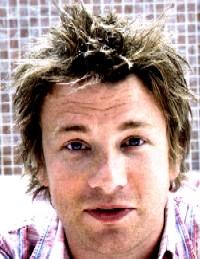
If that's the effect you're after, I suppose it's easy enough to get a hairdresser to come and walk about on your head every morning, but how on earth do you maintain a 24-hour stubble?
Since writing the above I have been told that modern shaving technology enables you to shave your stubble to any length from nothing upwards in one-millimetre steps, though why anyone should find this necessary remains a mystery.
Sunday, 25 September 2005
Dropping a hint
A woman whom I had believed to be an ardent reader of OMF has just sent me this:
"I had my own blog for a while but I decided to go back to just pointless, incessant barking."

"I had my own blog for a while but I decided to go back to just pointless, incessant barking."
Friday, 23 September 2005
Wrapping it up
 Here’s a book jacket with all the understated charm and elegance of those they used to put round dime novels. Michael Moore’s polemic was written in a similar hectic style and contains clumsy insults, violent accusations and much heavy-handed satire.
By and large the rancour is justified and the conclusions are accurate.
Wednesday, 21 September 2005
It’s the rich what gets the pleasure…
The internet – particularly the blogosphere – provides great opportunities for sociological study. One can compare and contrast the aspirations, tastes and viewpoints of people from either end of every kind of spectrum – social, political, geographical - simply by reading what they write about themselves.
Take Top People, for example: what does Hugh Massingham-Bohun in Gloucestershire have in common with Edward Cabot Ames III in Massachusetts, apart from the possession of a great deal of money?
And what do either of them have in common with a Non-Top Person like, say, Luke Riemenschneider in Arkansas, who has rather less? Nothing much, I suppose, except for the desire to tell the world about their lives in the mistaken belief that the world will find them of interest.
Actually, unlike most blogs I find these three are not particularly boring since they all describe, honestly as far as one can tell, lives as different from mine as any life could possibly be; I am not envious of any of them, though they all have some attractive aspects….
Take Top People, for example: what does Hugh Massingham-Bohun in Gloucestershire have in common with Edward Cabot Ames III in Massachusetts, apart from the possession of a great deal of money?
And what do either of them have in common with a Non-Top Person like, say, Luke Riemenschneider in Arkansas, who has rather less? Nothing much, I suppose, except for the desire to tell the world about their lives in the mistaken belief that the world will find them of interest.
Actually, unlike most blogs I find these three are not particularly boring since they all describe, honestly as far as one can tell, lives as different from mine as any life could possibly be; I am not envious of any of them, though they all have some attractive aspects….
Monday, 19 September 2005
I don’t even know what I like
Having publicly confessed to my deficiencies in the field of sport, I might as well own up to my total lack of artistic talent or appreciation. This seems to me to be a far more serious failing; any whippet can run faster than a man, any fairly fit wildebeest can jump higher, and it would not be difficult to teach a bright chimpanzee to play most ball games, but the ability to create a work of art (except by accident) is something that distinguishes us from animals.
So while my admiration of sportsmen is less than whole-hearted, I have enormous respect, and some envy, for people who can draw, or paint, or sculpt, or even make a nice picture by sticking grass and bits of cloth on a piece of cardboard. Recently I have been enjoying making up web pages which exhibit the work of a few artists; I charge a small fee for this but it’s not a money-making venture, just a source of satisfaction in that it makes me feel that I am associated in some small way with the world of art.
And I imagine that on the whole artists are rather more agreeable and interesting people than footballers or cricketers, though I don't actually know any of those.
So while my admiration of sportsmen is less than whole-hearted, I have enormous respect, and some envy, for people who can draw, or paint, or sculpt, or even make a nice picture by sticking grass and bits of cloth on a piece of cardboard. Recently I have been enjoying making up web pages which exhibit the work of a few artists; I charge a small fee for this but it’s not a money-making venture, just a source of satisfaction in that it makes me feel that I am associated in some small way with the world of art.
And I imagine that on the whole artists are rather more agreeable and interesting people than footballers or cricketers, though I don't actually know any of those.
Saturday, 17 September 2005
This Sporting Life
I have been taken to task by one of my nearest and dearest for having expressed mild irritation at the brouhaha over the English cricket team’s recent victory. It had seemed to me that for the result of a game of cricket to feature for several days as the first and longest item of every TV news broadcast was excessive; the spectacle of smirking newsreaders telling us over and over again how epoch-making it all was – Georgeous George Alegiah was particularly gruesome – must have palled even for some sport-lovers.
I was accused of meanly resenting the “general happiness enabling people to forget their miserable dull lives”. This is not true: I like people to be happy, and if all it takes is a sporting victory then good luck to them. What I do resent is the way in which the bullying majority assume that those who do not share their enthusiasms must be perverse, unpatriotic or effete, or all three; I do not demand that they appreciate, say, my passion for early Assyrian stringed instruments, so why do they think I ought to enjoy listening to them wittering on about their silly games?
I suppose it is partly my fault for having nowadays stopped concealing my total lack of interest in all forms of sport. For many years, while I was making a living in a field related to sport, I had to dissemble and at times actually pretend that watching some contest or other, when I didn’t understand the rules and didn’t care much who won or lost, was my idea of fun.
But, I hear you cry, why did you ever get involved in something so unrelated to your inclinations? The answer is simple: in many jobs, the end product doesn’t really matter too much. Suppose you are the CEO of a multinational employing 4,000 people making mild steel flanges; must you be devoted to mild steel flanges? Would you necessarily want to spend your leisure time watching TV programmes about them or discussing them with your friends? Of course not, but running the company could be fulfilling work at which you were fairly competent and which you thoroughly enjoyed doing.
So it was with me, but of course all my colleagues naturally assumed that I was as fascinated by sport as they were, and it would have been churlish (and a poor career move) to have let them know how much it bored me. Sometimes the pretence was a strain.
The first time I went to Beijing (or Peking as we called it then) my interpreter told me when I got off the train from Lo Wu that my hosts had decided to honour me the next day by granting me a rare privilege. I was already excited just to be in China and I tossed about all night wondering what this surprise treat would be: a confidential talk with some of the party leaders, perhaps? A private visit to part of the Forbidden City not normally shown to foreigners? Dinner with some of their top circus stars at the biggest of the famous Roast Duck Restaurants, the one that serves 5,000 meals every day?
No. It was a seat (admittedly a good one, with arms) at a football match. The Red Army versus Albania. Three hours in a scruffy sweltering stadium with twenty thousand spectators screaming, spitting and generally carrying on, while I tried hard to pretend I was having the time of my life.
In later years I devised various stratagems for keeping up the pretence of my keen interest in all things sportive; I picked up from experts a few phrases relevant to each sport which I could trot out when at some dreary event I was woken from a light doze by someone wanting to know what I thought about it. One of those for football, I remember, was: “…well, of course, they’re keeping it very loose in midfield, aren’t they?…” Or, for cricket, something along the lines of: "...just like Gooch, really; he was always flashing at rising balls on the legside... "
I had no idea what these things meant, but neither did anyone else and I said them confidently, so they usually went down quite well.
I was accused of meanly resenting the “general happiness enabling people to forget their miserable dull lives”. This is not true: I like people to be happy, and if all it takes is a sporting victory then good luck to them. What I do resent is the way in which the bullying majority assume that those who do not share their enthusiasms must be perverse, unpatriotic or effete, or all three; I do not demand that they appreciate, say, my passion for early Assyrian stringed instruments, so why do they think I ought to enjoy listening to them wittering on about their silly games?
I suppose it is partly my fault for having nowadays stopped concealing my total lack of interest in all forms of sport. For many years, while I was making a living in a field related to sport, I had to dissemble and at times actually pretend that watching some contest or other, when I didn’t understand the rules and didn’t care much who won or lost, was my idea of fun.
But, I hear you cry, why did you ever get involved in something so unrelated to your inclinations? The answer is simple: in many jobs, the end product doesn’t really matter too much. Suppose you are the CEO of a multinational employing 4,000 people making mild steel flanges; must you be devoted to mild steel flanges? Would you necessarily want to spend your leisure time watching TV programmes about them or discussing them with your friends? Of course not, but running the company could be fulfilling work at which you were fairly competent and which you thoroughly enjoyed doing.
So it was with me, but of course all my colleagues naturally assumed that I was as fascinated by sport as they were, and it would have been churlish (and a poor career move) to have let them know how much it bored me. Sometimes the pretence was a strain.
The first time I went to Beijing (or Peking as we called it then) my interpreter told me when I got off the train from Lo Wu that my hosts had decided to honour me the next day by granting me a rare privilege. I was already excited just to be in China and I tossed about all night wondering what this surprise treat would be: a confidential talk with some of the party leaders, perhaps? A private visit to part of the Forbidden City not normally shown to foreigners? Dinner with some of their top circus stars at the biggest of the famous Roast Duck Restaurants, the one that serves 5,000 meals every day?
No. It was a seat (admittedly a good one, with arms) at a football match. The Red Army versus Albania. Three hours in a scruffy sweltering stadium with twenty thousand spectators screaming, spitting and generally carrying on, while I tried hard to pretend I was having the time of my life.
In later years I devised various stratagems for keeping up the pretence of my keen interest in all things sportive; I picked up from experts a few phrases relevant to each sport which I could trot out when at some dreary event I was woken from a light doze by someone wanting to know what I thought about it. One of those for football, I remember, was: “…well, of course, they’re keeping it very loose in midfield, aren’t they?…” Or, for cricket, something along the lines of: "...just like Gooch, really; he was always flashing at rising balls on the legside... "
I had no idea what these things meant, but neither did anyone else and I said them confidently, so they usually went down quite well.
Wednesday, 14 September 2005
Goodbye to 2½ million quotes
In a few days time my three months’ subscription to the online Oxford English Dictionary will expire, and I haven’t really been making enough use of it to make it worth while subscribing for another three months.
I shall miss it, though.
I never actually felt impelled to seek out the recondite kind of information like that involving Jane Austen which I mentioned in an earlier post about the OED, but it was comforting to know that I could have found it if I had looked, and I have spent some happy hours strolling among some of its winding and overgrown paths leading nowhere of any importance.
How shall I bid it farewell? I think perhaps by extracting the answer to a totally pointless question: How heavy is a batman?
Typically, the OED’s answer is comprehensive and fascinating, if you’ve not got a lot to keep you busy:
As everyone knows, a batman is “an oriental weight varying greatly in value according to the locality; it is equal to the Persian man or the Anglo-Indian maund”.
But of course it depends on where you are, and when. In 1599 HAKLUYT stated quite clearly “Euery bateman here [i.e. Babylon] maketh 7 pound and 5 ounces English waight”, but in 1740 THOMPSON & HOGG observed that “Their weights [at Khiva] are the great batman, equal to eighteen lb. russian, and the lesser batman, nine and a quarter. Then, in 1852 MCCULLOCH brought hot news from Constantinople to the effect that “6 okes [i.e. about 16 lbs.] = 1 batman”.
What richness is here! No wonder that nowadays some hanker after more colour and less dreary consistency; the writer Paul Jennings spoke for many of us when he admired an ancient Hebrew system of weights and measures, under which 1 silloth was equal to 5½ (or sometimes 6¾) ephahs.
I really shall miss the OED.
I shall miss it, though.
I never actually felt impelled to seek out the recondite kind of information like that involving Jane Austen which I mentioned in an earlier post about the OED, but it was comforting to know that I could have found it if I had looked, and I have spent some happy hours strolling among some of its winding and overgrown paths leading nowhere of any importance.
How shall I bid it farewell? I think perhaps by extracting the answer to a totally pointless question: How heavy is a batman?
Typically, the OED’s answer is comprehensive and fascinating, if you’ve not got a lot to keep you busy:
As everyone knows, a batman is “an oriental weight varying greatly in value according to the locality; it is equal to the Persian man or the Anglo-Indian maund”.
But of course it depends on where you are, and when. In 1599 HAKLUYT stated quite clearly “Euery bateman here [i.e. Babylon] maketh 7 pound and 5 ounces English waight”, but in 1740 THOMPSON & HOGG observed that “Their weights [at Khiva] are the great batman, equal to eighteen lb. russian, and the lesser batman, nine and a quarter. Then, in 1852 MCCULLOCH brought hot news from Constantinople to the effect that “6 okes [i.e. about 16 lbs.] = 1 batman”.
What richness is here! No wonder that nowadays some hanker after more colour and less dreary consistency; the writer Paul Jennings spoke for many of us when he admired an ancient Hebrew system of weights and measures, under which 1 silloth was equal to 5½ (or sometimes 6¾) ephahs.
I really shall miss the OED.
[...but see HERE and many subsequent posts.]
Monday, 12 September 2005
Terrorists trained abroad
Consider the situation: A number of our fellow-countrymen separated from the majority of us by religious beliefs but relatively happily integrated with the larger society; within that group a small band of bombers determined to wreak maximum destruction in the heart of London—extremist and violent religionists, disowned by most of those who share their faith and motivated by a far deeper attachment to a supra-national creed than to the British state. Some of them trained abroad, many of them Englishmen but deeply disillusioned with the way in which the highly materialistic, highly commercial and highly nationalistic culture of this country leads away from their ideals.
That was how things stood exactly four hundred years ago. But the bomb did not go off and Guy Fawkes and his fellow conspirators were caught and tortured to death. There was now seen to be no difference between Catholics loyal to the British state and those intent on subverting it, and the equivalent of pass laws were enacted. Demonstrably good and innocent Catholic men and women were hunted down, subjected to nauseatingly corrupt trials and tortured for confessions or had confessions concocted for them.
The plot set back the cause of toleration for two centuries. Not until 1829, with the Catholic Emancipation Act, were Roman Catholics at last admitted fully into the legal, political and property-owning life of this country.
Of course one episode cannot be mapped on to another 400 years later, but the story of the Gunpowder Plot does carry a warning: a tolerant, multi-layered and in many ways subtle approach to cultural diversity was quite suddenly and for a very long time thrown into reverse by an attack made on the majority culture by a tiny, partially unhinged group of murderous maniacs. They represented no one but themselves, but their actions were frightening enough for the majority culture to close down on them and any one who looked like them.
The quatercentenary of the Gunpowder Plot is passing without much recognition. Perhaps the resonances of that period are too hot and too strong; the Catholics were the Muslims of 1605.
That was how things stood exactly four hundred years ago. But the bomb did not go off and Guy Fawkes and his fellow conspirators were caught and tortured to death. There was now seen to be no difference between Catholics loyal to the British state and those intent on subverting it, and the equivalent of pass laws were enacted. Demonstrably good and innocent Catholic men and women were hunted down, subjected to nauseatingly corrupt trials and tortured for confessions or had confessions concocted for them.
The plot set back the cause of toleration for two centuries. Not until 1829, with the Catholic Emancipation Act, were Roman Catholics at last admitted fully into the legal, political and property-owning life of this country.
Of course one episode cannot be mapped on to another 400 years later, but the story of the Gunpowder Plot does carry a warning: a tolerant, multi-layered and in many ways subtle approach to cultural diversity was quite suddenly and for a very long time thrown into reverse by an attack made on the majority culture by a tiny, partially unhinged group of murderous maniacs. They represented no one but themselves, but their actions were frightening enough for the majority culture to close down on them and any one who looked like them.
The quatercentenary of the Gunpowder Plot is passing without much recognition. Perhaps the resonances of that period are too hot and too strong; the Catholics were the Muslims of 1605.
Saturday, 10 September 2005
Well, I declare!
That is a phrase which I associate with American matrons expressing surprise; the OED gives a quotation dated 1839 from Kavanagh by Longfellow : Well, I declare! If it is not Mr. Kavanagh! The OED also notes that “I declare” can be used as a mere asseveration ("emphatic confirmation of a statement; a word or phrase used to express confirmation; an oath").
Here is another quotation, not used by the OED; it is from Stanley Holloway's monologue My Word, You Do look Queer! in which a poor chap is told how ill he looks by everyone he meets:
By gosh, who'd have thought it? Well, well, I declare,
I'd never have known you except for your hair!
In February 2000 the exact meaning of the verb “to declare”, as defined not by the OED but by its great predecessor, Samuel Johnson’s Dictionary, became a matter of some importance in a federal lawsuit. Seventeen Congressmen brought an action arguing that President Bill Clinton had failed to obtain a “declaration of war” before launching 4,500 air strikes against Yugoslavia, and had thereby deprived them of their right under the US Constitution to choose whether to commit their country to war or to refuse their consent. One of the issues at stake was the exact meaning of the words declare and war, and the decision was taken to consult the dictionary which would have been the standard authority when the Constitution was drawn up in 1787, which was Johnson’s. His Dictionary has been cited many other times in debates over the Constitution in the American courts.
When Noah Webster sent a copy of the second edition of his own work An American Dictionary of the English Language to Queen Victoria he said to the diplomat who carried it to her “Our common language is one of the ties that bind the two nations together” (George Bernard Shaw later gave a different slant to that remark).
Webster admired Johnson but loathed his Dictionary; he would not have been happy had he known that it will have a role to play in American law as long as the American Constitution remains intact.
Here is another quotation, not used by the OED; it is from Stanley Holloway's monologue My Word, You Do look Queer! in which a poor chap is told how ill he looks by everyone he meets:
By gosh, who'd have thought it? Well, well, I declare,
I'd never have known you except for your hair!
In February 2000 the exact meaning of the verb “to declare”, as defined not by the OED but by its great predecessor, Samuel Johnson’s Dictionary, became a matter of some importance in a federal lawsuit. Seventeen Congressmen brought an action arguing that President Bill Clinton had failed to obtain a “declaration of war” before launching 4,500 air strikes against Yugoslavia, and had thereby deprived them of their right under the US Constitution to choose whether to commit their country to war or to refuse their consent. One of the issues at stake was the exact meaning of the words declare and war, and the decision was taken to consult the dictionary which would have been the standard authority when the Constitution was drawn up in 1787, which was Johnson’s. His Dictionary has been cited many other times in debates over the Constitution in the American courts.
When Noah Webster sent a copy of the second edition of his own work An American Dictionary of the English Language to Queen Victoria he said to the diplomat who carried it to her “Our common language is one of the ties that bind the two nations together” (George Bernard Shaw later gave a different slant to that remark).
Webster admired Johnson but loathed his Dictionary; he would not have been happy had he known that it will have a role to play in American law as long as the American Constitution remains intact.
Acknowledgements to Henry Hitchings' Dr Johnson's Dictionary
Wednesday, 7 September 2005
You couldn't make them up
I must have missed the announcement in January of the 2005 Diagram winner, and I have only just caught up. This prize (a magnum of champagne) has been awarded annually by The Bookseller magazine since 1978 to the publishers of the oddest book title of the year, and reflects the book trade's unceasing bafflement and delight at some of the highly specialised titles which get into print; after nominations from the public, the selection is made by a poll of publishers and booksellers.
On the short list this year were Detecting Foreign Bodies in Food and The Aesthetics of the Japanese Lunchbox.
Everyone will have favourites among earlier winners or nominees. Here are some of mine:
High-Performance Stiffened Structures
Did Lewis Carroll Visit Llandudno?
Whose Bottom? A Lift-the-Flap Book
Woodcarving with a Chainsaw
Psoriasis at Your Fingertips
Short walks at Land’s End
Butterworths Corporate Manslaughter Service (dealing with legal matters)
Living with Crazy Buttocks (not about a Sioux warrior, but a book of Australian cartoons)
Melons for the Passionate Grower
Six-Legged Sex: The Erotic Lives of Bugs
Without Regret: A Handbook for Owners of Canine Amputees
Women and Integrated Pest Management
First You Take a Leek
Forensic Examination of Rubber Stamps
Passing Gas
Postmortem Collectibles
Red-haired Irishwomen on the Bog
Proceedings of the Second International Workshop on Nude Mice
Oral Sadism and the Vegetarian Personality
How to Avoid Huge Ships
227 Secrets Your Snake Wants You to Know
Celtic Sex Magic: For Couples, Groups and Solitary Practitioners
Design for Impact: 50 Years of Airline Safety Cards
Hot Topics in Urology.
Sadly, the contest is nowadays internationally famous and so popular that publishers have started choosing titles in the hope of winning it (the champagne isn't worth much but the publicity is). The magazine rebukes those who submit self-consciously titled entries, perhaps dreamed up in a bid to emulate the 2003 classic winner, Big Book of Lesbian Horse Stories. So it is good to hear that this year the runaway prize-winner, also on equestrian matters, was an extremely serious and useful manual selling around 400 copies a month: it teaches riders how to stop horses bucking, baulking, bolting or wheeling around when sudden noises or sights frighten them, and is called How to Bombproof your Horse.
On the short list this year were Detecting Foreign Bodies in Food and The Aesthetics of the Japanese Lunchbox.
Everyone will have favourites among earlier winners or nominees. Here are some of mine:
High-Performance Stiffened Structures
Did Lewis Carroll Visit Llandudno?
Whose Bottom? A Lift-the-Flap Book
Woodcarving with a Chainsaw
Psoriasis at Your Fingertips
Short walks at Land’s End
Butterworths Corporate Manslaughter Service (dealing with legal matters)
Living with Crazy Buttocks (not about a Sioux warrior, but a book of Australian cartoons)
Melons for the Passionate Grower
Six-Legged Sex: The Erotic Lives of Bugs
Without Regret: A Handbook for Owners of Canine Amputees
Women and Integrated Pest Management
First You Take a Leek
Forensic Examination of Rubber Stamps
Passing Gas
Postmortem Collectibles
Red-haired Irishwomen on the Bog
Proceedings of the Second International Workshop on Nude Mice
Oral Sadism and the Vegetarian Personality
How to Avoid Huge Ships
227 Secrets Your Snake Wants You to Know
Celtic Sex Magic: For Couples, Groups and Solitary Practitioners
Design for Impact: 50 Years of Airline Safety Cards
Hot Topics in Urology.
Sadly, the contest is nowadays internationally famous and so popular that publishers have started choosing titles in the hope of winning it (the champagne isn't worth much but the publicity is). The magazine rebukes those who submit self-consciously titled entries, perhaps dreamed up in a bid to emulate the 2003 classic winner, Big Book of Lesbian Horse Stories. So it is good to hear that this year the runaway prize-winner, also on equestrian matters, was an extremely serious and useful manual selling around 400 copies a month: it teaches riders how to stop horses bucking, baulking, bolting or wheeling around when sudden noises or sights frighten them, and is called How to Bombproof your Horse.
Monday, 5 September 2005
Chalala chalala chalala-loo, diddle-oo diddle-oo diddle-oo
A fair and comprehensive review of any performance or work of art of any kind must examine the following:
What is the artist trying to achieve?
How well has it been achieved?
Has it been done before?
Was it worth doing?
In the case of the work of the egregious Australian diva Margaret Schneider, the first question is difficult to answer, and the answers to the others are, respectively: probably quite well, probably not, and definitely not.
Music-lovers will want to confirm this by going HERE and clicking on the first excerpt listed. This contains two brief pieces; do not switch off after the first—it is the second which gives this post its title.
What is the artist trying to achieve?
How well has it been achieved?
Has it been done before?
Was it worth doing?
In the case of the work of the egregious Australian diva Margaret Schneider, the first question is difficult to answer, and the answers to the others are, respectively: probably quite well, probably not, and definitely not.
Music-lovers will want to confirm this by going HERE and clicking on the first excerpt listed. This contains two brief pieces; do not switch off after the first—it is the second which gives this post its title.
Saturday, 3 September 2005
How to co-ordinate an emergency
Yesterday Baton Rouge’s emergency co-ordinator, Irma Plummer, tears in her eyes, asked God to help the town: You have reminded us of how strong you are and we yield and acknowledge that. Right now, Father, we pray first for your protection and your grace which is unceasing and unfailing ... I don't even know what to ask for today, Lord. I don't even know what will beset us today. (The Guardian)
Such an official might be expected to have some idea of what to ask for, a better idea of who to ask, and something less dispiriting to say. God is not usually blamed for natural disasters because it’s all our (or Adam’s) fault for being sinful; this woman appears to believe that the old monster killed ten thousand people on a whim, just to demonstrate his omnipotence.
.
Such an official might be expected to have some idea of what to ask for, a better idea of who to ask, and something less dispiriting to say. God is not usually blamed for natural disasters because it’s all our (or Adam’s) fault for being sinful; this woman appears to believe that the old monster killed ten thousand people on a whim, just to demonstrate his omnipotence.
.
Thursday, 1 September 2005
Shaving gel
Bought some by mistake the other day. Do the people who use this stuff really enjoy getting up in the morning and smearing their faces with cold blue slime?
Tuesday, 30 August 2005
Shall we dance?
The boat we were on last week held 1,750 passengers and 980 crew. Some of the latter had titles like Chief Engineer, Bosun’s Mate, Master at Arms, Deck Ratings (30 of these) and there was even a Captain.
Many of these gallant fellows no doubt sprang from five generations of fine old sea-faring ancestors, but among the remainder of the crew were many whose skills must have been of quite a different kind: Casino Staff (16), Cocktail Pianists (2), Barkeepers (17), Chefs (101), Florists (2), Waiters/Waitresses (183), Salon/Spa Staff (20), Dancers (10), Receptionists (13)…..
…..and Gentleman Hosts (6).
These men were generally tall, distinguished, of sober mien and impeccably dressed, giving the impression that they might have accepted their appointments merely to supplement their senior officer’s retirement pay—though, come to think of it, few officers of staff rank would have the necessary foxtrot expertise. Anyway, they were not instantly recognisable as gigolos.
Many of these gallant fellows no doubt sprang from five generations of fine old sea-faring ancestors, but among the remainder of the crew were many whose skills must have been of quite a different kind: Casino Staff (16), Cocktail Pianists (2), Barkeepers (17), Chefs (101), Florists (2), Waiters/Waitresses (183), Salon/Spa Staff (20), Dancers (10), Receptionists (13)…..
…..and Gentleman Hosts (6).
These men were generally tall, distinguished, of sober mien and impeccably dressed, giving the impression that they might have accepted their appointments merely to supplement their senior officer’s retirement pay—though, come to think of it, few officers of staff rank would have the necessary foxtrot expertise. Anyway, they were not instantly recognisable as gigolos.
Sunday, 28 August 2005
Afloat
medium.jpg)
Yes, nice holiday, thank you.
Samuel Johnson said that going to sea is like going to prison with the chance of being drowned, and a hundred years later Dickens wrote that passengers ate in "a hearse with windows”, and that for lunch there might be "a dismal spread of pig’s face, cold ham, salt beef” or perhaps "a smoking mess of hot collops”, and dinner would be “more potatoes and meat” climaxed by "a rather mouldy dessert of apples, grapes and oranges”.
Sea-going is rather more pleasant these days, and very little pig’s face is offered on board.
The person, or possibly the two people, who would like to see 64 holiday photos, mostly of us sitting at tables eating or drinking, will find them HERE.
Friday, 12 August 2005
Pining for the fjords
No more posts for a couple of weeks.
We are going in a sort of floating Harrods to the North Sea, particularly the crinkly bits of Norway for which Slartibartfast got an award.
I imagine that Arctic hardships are not on the agenda, but it seems that there may be other hazards. Our pre-sailing information brochure devotes two whole pages to Novovirus Gastroenteritis, telling us exactly what to do when the vomiting and diarrhoea start.
We are going in a sort of floating Harrods to the North Sea, particularly the crinkly bits of Norway for which Slartibartfast got an award.
I imagine that Arctic hardships are not on the agenda, but it seems that there may be other hazards. Our pre-sailing information brochure devotes two whole pages to Novovirus Gastroenteritis, telling us exactly what to do when the vomiting and diarrhoea start.
Tuesday, 9 August 2005
After-Christmas Party
Regular readers of Other Men's Flowers - three or four people log on to it almost every month - know me well and are aware that most of what I write is not to be taken seriously; others who have come across the blog by accident when they are looking for something else may not realise this. More than once I have been taken to task for irresponsibility, or disrespect to some cherished institution, and have had to say: no no, I didn't really mean that, it was supposed to be a joke. Perhaps I ought to preface each post with a Seriousness Rating: 10 points for absolutely no kidding, 9 for touch of irony here and so on down to 0 for this piece is total hogwash.
On one occasion some years ago my levity led to a major misunderstanding. A film company I had been in contact with invited me to a post-Christmas party. The invitation said that they were closing down from December 20th to January 6th, described the various (fictitious) ways in which their directors were planning to spend Christmas, and announced that they were holding “a small and extremely informal party for a number of hand-pickled guests on 17th January….if you would care to join us we would be diluted to see you….Please do not drive as the smoked cheese sandwiches we will be supplying are notoriously strong...”
All very light-hearted and it was nice of them to invite me. But I replied:
Dear Sirs,
Thank you for your letter, from which I note that your directors and staff, like those in other trades similarly unaware of the need to combat the industrial challenge of the Far East, are, on the pretext of observing a religious festival, stopping work for no less than seventeen days in order to indulge in activities which sound to me to be highly improper if not actually offences under the Public Order Act of 1904.
In these circumstances there seems little point in giving you advance notice of our own Christmas shut-down period, which will run from 4.30pm on December 24th to 8am on December 27th.
Thank you also for your invitation to a party on 17th January. I am obliged to decline it partly because I shall be away that weekend but mainly because, in my experience, such “extremely informal” parties tend to be occasions for unseemly horseplay or, at the very least, behaviour of a questionable nature.
Yours sincerely
A reasonable response to such a letter would have been Get lost, you pompous git, but the recipient was a gentleman, and after Christmas he replied, with much forbearance:
I am extremely sorry if our light-hearted Christmas note offended you, as your letter seems to suggest. That was certainly not our intention. No-one is more conscious of the importance of Christmas as a religious festival than I am and I would be most upset to feel that anyone had any doubts on that point.
For the record, we stopped work for seventeen days because we have been so busy over the last twelve months that most of our staff have had no time to take a summer holiday.
Our party, which we are sorry you are unable to attend, is certainly not an occasion for horseplay of any kind. We have simply found from experience that a light-hearted invitation is more appreciated by most of the people we have the pleasure with than the conventional printed text sent out on most similar occasions.
I apologise if we have caused you any offence and send you our good wishes for the coming year.
Yours sincerely
This, of course, made me feel ashamed, and I responded immediately:
Dear John,
Your letter was a charming one, and I am really very sorry that I put you to the trouble of writing it.
The invitation was a breath of fresh air amid the dreary stuff which arrives at Christmas and my reply was intended to be in similar vein. Although it is some time since we last met, it simply didn’t occur to me that you might remember me, if at all, as a person likely to be offended by the offer of free booze and a good time.
I would like to ask you to bear me in mind the next time you throw a party but from your second letter it sounds as if you expect your guests to behave with the utmost decorum, so I might not fit in. I should tell you that now, in the evening of my days, I am always grateful for the chance of watching a bit of unseemly horseplay, let alone joining in.
Oh, and what I wrote about our own shut-down was not strictly accurate: I myself took an extended break legless in a pub in Dorset, and some of my staff haven’t come back yet.
Yours sincerely
Back came a gracious letter forgiving me and promising to invite me another time, so it all ended happily.
On one occasion some years ago my levity led to a major misunderstanding. A film company I had been in contact with invited me to a post-Christmas party. The invitation said that they were closing down from December 20th to January 6th, described the various (fictitious) ways in which their directors were planning to spend Christmas, and announced that they were holding “a small and extremely informal party for a number of hand-pickled guests on 17th January….if you would care to join us we would be diluted to see you….Please do not drive as the smoked cheese sandwiches we will be supplying are notoriously strong...”
All very light-hearted and it was nice of them to invite me. But I replied:
Dear Sirs,
Thank you for your letter, from which I note that your directors and staff, like those in other trades similarly unaware of the need to combat the industrial challenge of the Far East, are, on the pretext of observing a religious festival, stopping work for no less than seventeen days in order to indulge in activities which sound to me to be highly improper if not actually offences under the Public Order Act of 1904.
In these circumstances there seems little point in giving you advance notice of our own Christmas shut-down period, which will run from 4.30pm on December 24th to 8am on December 27th.
Thank you also for your invitation to a party on 17th January. I am obliged to decline it partly because I shall be away that weekend but mainly because, in my experience, such “extremely informal” parties tend to be occasions for unseemly horseplay or, at the very least, behaviour of a questionable nature.
Yours sincerely
A reasonable response to such a letter would have been Get lost, you pompous git, but the recipient was a gentleman, and after Christmas he replied, with much forbearance:
I am extremely sorry if our light-hearted Christmas note offended you, as your letter seems to suggest. That was certainly not our intention. No-one is more conscious of the importance of Christmas as a religious festival than I am and I would be most upset to feel that anyone had any doubts on that point.
For the record, we stopped work for seventeen days because we have been so busy over the last twelve months that most of our staff have had no time to take a summer holiday.
Our party, which we are sorry you are unable to attend, is certainly not an occasion for horseplay of any kind. We have simply found from experience that a light-hearted invitation is more appreciated by most of the people we have the pleasure with than the conventional printed text sent out on most similar occasions.
I apologise if we have caused you any offence and send you our good wishes for the coming year.
Yours sincerely
This, of course, made me feel ashamed, and I responded immediately:
Dear John,
Your letter was a charming one, and I am really very sorry that I put you to the trouble of writing it.
The invitation was a breath of fresh air amid the dreary stuff which arrives at Christmas and my reply was intended to be in similar vein. Although it is some time since we last met, it simply didn’t occur to me that you might remember me, if at all, as a person likely to be offended by the offer of free booze and a good time.
I would like to ask you to bear me in mind the next time you throw a party but from your second letter it sounds as if you expect your guests to behave with the utmost decorum, so I might not fit in. I should tell you that now, in the evening of my days, I am always grateful for the chance of watching a bit of unseemly horseplay, let alone joining in.
Oh, and what I wrote about our own shut-down was not strictly accurate: I myself took an extended break legless in a pub in Dorset, and some of my staff haven’t come back yet.
Yours sincerely
Back came a gracious letter forgiving me and promising to invite me another time, so it all ended happily.
Monday, 8 August 2005
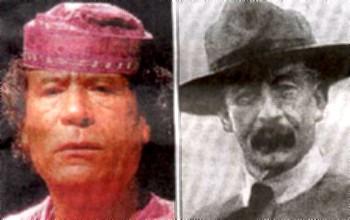
Role model

Saturday, 6 August 2005
Another damned, thick, square, book…
“…always scribble, scribble, scribble! Eh, Mr Gibbon?"
This was the Duke of Gloucester’s less than gracious comment upon receiving the second volume of The Decline and Fall of the Roman Empire from the author in 1781.
D and F of the RE does go on a bit, but actually Gibbon was not particularly prolific; the output of top scribblers is of a different order. Other Men's Flowers (mine, not Wavell's) now contains 70,000 words, which I thought of as serious labour until it was pointed out to me that this is only the length of a shortish novel and that Georges Simenon wrote 220 novels, sometimes at the rate of one a fortnight.
He also claimed in his autobiography to have had sex with 20,000 different women but this is a suspiciously round figure and must have been mere guesswork. There could hardly have been time to ask their names, let alone note them down, so that precision was impossible: if anyone had made a careful check it might well have been discovered that, for example, the big redhead in Amsterdam had been counted twice. Odd that such a man should have created the most contented husband in all detective fiction, though Mme Maigret had to put up with his fits of abstraction, his long hours away at the Quai des Orfévres and his smelly pipe, her only reward being his appreciation of her cassoulet and choucroute.
But I digress; this post was supposed to be about prolific writers. Among those I admire are the dramatic critic, essayist, novelist and diarist James Agate, who liked to tot up his output by the million words, and of course Samuel Johnson. In the years before he became modestly famous and comfortably off, he scraped a living from translation, biography and every kind of hack journalism: in poor health, in a squalid garret by the light of a single candle, he often churned out 10,000 words a night. Now that really was serious labour.
This was the Duke of Gloucester’s less than gracious comment upon receiving the second volume of The Decline and Fall of the Roman Empire from the author in 1781.
D and F of the RE does go on a bit, but actually Gibbon was not particularly prolific; the output of top scribblers is of a different order. Other Men's Flowers (mine, not Wavell's) now contains 70,000 words, which I thought of as serious labour until it was pointed out to me that this is only the length of a shortish novel and that Georges Simenon wrote 220 novels, sometimes at the rate of one a fortnight.
He also claimed in his autobiography to have had sex with 20,000 different women but this is a suspiciously round figure and must have been mere guesswork. There could hardly have been time to ask their names, let alone note them down, so that precision was impossible: if anyone had made a careful check it might well have been discovered that, for example, the big redhead in Amsterdam had been counted twice. Odd that such a man should have created the most contented husband in all detective fiction, though Mme Maigret had to put up with his fits of abstraction, his long hours away at the Quai des Orfévres and his smelly pipe, her only reward being his appreciation of her cassoulet and choucroute.
But I digress; this post was supposed to be about prolific writers. Among those I admire are the dramatic critic, essayist, novelist and diarist James Agate, who liked to tot up his output by the million words, and of course Samuel Johnson. In the years before he became modestly famous and comfortably off, he scraped a living from translation, biography and every kind of hack journalism: in poor health, in a squalid garret by the light of a single candle, he often churned out 10,000 words a night. Now that really was serious labour.
Subscribe to:
Posts (Atom)