
The increasing sophistication of our tastes in food and the development of such esoteric areas of research as molecular gastronomy sometimes distract us from the high place that simple and homely fare should hold in our affection.
To counterbalance the influence of the likes of Heston Blumenthal, I suggest a revival of interest in an easily prepared dish whose whole charm lies in its simplicity and adaptability. It can be eaten alone, but also provides a steady base for more interesting flavours, and can appear without being incongruous at any of the three meals.
English Toast
Take three or four slices (not too thin) of one day-old white loaf (other ages and colours will do). Taking care not to lose the centres of the slices, place each in turn into a 250-volt 5-amp toaster set at No. 3. Your toaster may be fitted with an automatic setting which will eject the toast when done; if not, you will have to judge by waiting for a wisp of blue smoke to rise (the toast should, by now, be a beautiful golden brown; if it is black, start again). While still hot, remove the crusts with a bread knife, halve, and stack in a special rack. Serve warm with butter. Variations can be introduced by adding such widely contrasting tastes as marmalade or plum and apple jam.
Monday, 29 March 2004

Saturday, 27 March 2004
More blessed to receive
For seventeen years I was involved as an official in the organisation of international meetings. I was, I need hardly say, quite immune to any kind of corruption, mainly because the gifts I was offered by foreign delegates when I went overseas were generally not worth paying excess baggage on, let alone being corrupted by. Too late, I realised that I could have rectified this situation by circulating some guidance notes:
Those wishing to offer gifts to senior officials are advised that the following will not be accepted or even acknowledged:
Large heavy books about your country, illustrated with pictures of national monuments and your leader.
Dolls, particularly large ones in glass cases
Anything of vaguely ethnic significance for standing on the mantelpiece
Unidentifiable comestibles in leaking containers
Silly plaques or pennants
In general, alcoholic drinks are undesirable gifts, particularly obscure ones from your own country, in menacing dark-coloured bottles with incomprehensible labels, because no-one would want to use up his duty-free allowance on such things. However, old brandies, rare single malts and fine claret for drinking on the spot are, broadly speaking, acceptable.
The ideal gift is small, light, of high intrinsic value and easily concealed from Customs. Examples are:
Watches (not Russian)
Banknotes (sterling or dollars, used, small denominations)
Jewellery
Top-of-the-range SLR cameras (with extra lenses)
Bear in mind that the fact that you have taken the trouble to carry a gift across the world does not necessarily mean that the recipient will think it of sufficient interest or value to take home with him.
You must understand that no gift offered will, in any way, influence the attitude of officials towards any delegate. However, it is inevitable that a delegate who simply deposits at the offices, with his card, something amusing by Cartier will stand a better chance of obtaining preferential treatment than one who, in person and with halitosis, presents a large mis-shaped wooden object of unknown purpose, and makes a long speech about it. There is no need to ask to see the official personally and to take up his time in this way; if appropriate, he will send a message of thanks at a later date, in all probability.
Those wishing to offer gifts to senior officials are advised that the following will not be accepted or even acknowledged:
Large heavy books about your country, illustrated with pictures of national monuments and your leader.
Dolls, particularly large ones in glass cases
Anything of vaguely ethnic significance for standing on the mantelpiece
Unidentifiable comestibles in leaking containers
Silly plaques or pennants
In general, alcoholic drinks are undesirable gifts, particularly obscure ones from your own country, in menacing dark-coloured bottles with incomprehensible labels, because no-one would want to use up his duty-free allowance on such things. However, old brandies, rare single malts and fine claret for drinking on the spot are, broadly speaking, acceptable.
The ideal gift is small, light, of high intrinsic value and easily concealed from Customs. Examples are:
Watches (not Russian)
Banknotes (sterling or dollars, used, small denominations)
Jewellery
Top-of-the-range SLR cameras (with extra lenses)
Bear in mind that the fact that you have taken the trouble to carry a gift across the world does not necessarily mean that the recipient will think it of sufficient interest or value to take home with him.
You must understand that no gift offered will, in any way, influence the attitude of officials towards any delegate. However, it is inevitable that a delegate who simply deposits at the offices, with his card, something amusing by Cartier will stand a better chance of obtaining preferential treatment than one who, in person and with halitosis, presents a large mis-shaped wooden object of unknown purpose, and makes a long speech about it. There is no need to ask to see the official personally and to take up his time in this way; if appropriate, he will send a message of thanks at a later date, in all probability.
Thursday, 25 March 2004
Sphairistike, Gossima and Whiff-Whaff
 The first one became Lawn Tennis and the other two became Ping Pong.
This last onomatopoeia is not merely a nick-name: the Swedes and the Chinese, the two best in the world at playing it, call it something that sounds like pingpong, and French enthusiasts, who take it very seriously indeed, are quite content to be known as pongistes. If an astute manufacturer had not registered the name Ping Pong, the English Table Tennis Association might still be called, as it was until the 1920s, the Ping Pong Association. To my mind, it is “table tennis” which is the slightly contemptuous diminutive, like “clock golf” or “penny football”.
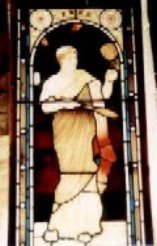 It is a sport which takes up very little space, but this gives its enthusiasts no sense of inferiority; the theme song of a Table Tennis World Championships in Serbia was translated as: "Our balls may be tiny but our aspirations are enormous". Anyway, it is not a reduced version of the sport that uses larger equipment – they just have common ancestors.
Not a lot of people know that Fred Perry won the men’s singles title at the third World Table Tennis Championships in Budapest in 1929. Later, of course, advancing years slowed his reflexes, and he concentrated on a less demanding sport…
P.S. George from SF informs me that the first computer game was launched in the US under the name Pong, and the same game launched in the UK was rebranded Ping.
[The world governing body described in the entry for 24th May 2004 is The International Table Tennis Federation]
Sunday, 21 March 2004
Father's 'negative' stage
Dr Spock’s Advice To Children is less well known than his other works:
Between the ages of thirty and fifty, father often enters an awkward or “negative” stage. He shows it in a sturdy independence; a reluctance to keep himself occupied in the home with simple fireside tasks like French knitting or silver-polishing; a seeking after the company of young adults – usually of the opposite sex. He begins to practise deceit; he is difficult at mealtimes – pushing away his plate, complaining that the food is cold, or being messy; he comes home late from business and frequently refuses to undress himself before going to bed; he repeats undesirable words that he has heard outside the home.
What attitude should a child take? Scolding the thirty-to-fifty-year-old often makes him more aggressive. If father is of a really independent nature, he may even run away from home.
The child must ask himself: Is father getting enough to drink at home? Acute thirst often accompanies the “awkward” stage. See that there is always a bottle of squash about the house; it is advisable to keep it on a shelf that is on father’s eye-level, so that he need not bend down for it. Many fathers who do not drink enough at home form the habit of accepting drinks from strangers – and this can lead to tummy upsets, irritability and headaches.
Has father enough toys in the house? You may find that if you leave your electric railroad equipment laid out at bedtime (do see that the plugs and switches are of the “safe” kind!), father will enjoy two-train smashes, and may eventually graduate to simple shunting and point-changing. He will damage the equipment, of course, but insistence on his paying for new parts will help to develop a “money sense” in him. Then try leaving your floating toys in the bath, and leave a wiping cloth among them. Once he has exhausted the possibilities of submarines and divers attacking ducks and soap-rafts, father may even wipe away the “tide-mark” on the side of the bath, if he remembers to let the water out.
Encourage father to bring his friends home. You will find that, once he sees them against his family background, he will soon learn to discriminate. He will not ask the naughty ones a second time. Here, again, see that there is plenty to drink. Within reason, let them have a beano - soda-pop, lime juice, or even milk shakes are quite safe in moderation.
Leave all your building bricks on the lounge carpet so that father and his friends can all play together. You will find that eventually they will be fully occupied in building edifices that even children would find difficult.
Finally, ask mother to help you - she may have some other ideas on how to deal with father’s “awkward” stage.
Between the ages of thirty and fifty, father often enters an awkward or “negative” stage. He shows it in a sturdy independence; a reluctance to keep himself occupied in the home with simple fireside tasks like French knitting or silver-polishing; a seeking after the company of young adults – usually of the opposite sex. He begins to practise deceit; he is difficult at mealtimes – pushing away his plate, complaining that the food is cold, or being messy; he comes home late from business and frequently refuses to undress himself before going to bed; he repeats undesirable words that he has heard outside the home.
What attitude should a child take? Scolding the thirty-to-fifty-year-old often makes him more aggressive. If father is of a really independent nature, he may even run away from home.
The child must ask himself: Is father getting enough to drink at home? Acute thirst often accompanies the “awkward” stage. See that there is always a bottle of squash about the house; it is advisable to keep it on a shelf that is on father’s eye-level, so that he need not bend down for it. Many fathers who do not drink enough at home form the habit of accepting drinks from strangers – and this can lead to tummy upsets, irritability and headaches.
Has father enough toys in the house? You may find that if you leave your electric railroad equipment laid out at bedtime (do see that the plugs and switches are of the “safe” kind!), father will enjoy two-train smashes, and may eventually graduate to simple shunting and point-changing. He will damage the equipment, of course, but insistence on his paying for new parts will help to develop a “money sense” in him. Then try leaving your floating toys in the bath, and leave a wiping cloth among them. Once he has exhausted the possibilities of submarines and divers attacking ducks and soap-rafts, father may even wipe away the “tide-mark” on the side of the bath, if he remembers to let the water out.
Encourage father to bring his friends home. You will find that, once he sees them against his family background, he will soon learn to discriminate. He will not ask the naughty ones a second time. Here, again, see that there is plenty to drink. Within reason, let them have a beano - soda-pop, lime juice, or even milk shakes are quite safe in moderation.
Leave all your building bricks on the lounge carpet so that father and his friends can all play together. You will find that eventually they will be fully occupied in building edifices that even children would find difficult.
Finally, ask mother to help you - she may have some other ideas on how to deal with father’s “awkward” stage.
Thursday, 18 March 2004
Warm beer
It is sad to see that Anthony Sampson, that perceptive chronicler of English ways, in his new book Who Runs This Place?, links warm beer and the English. This false connection stems from John Major's silly misquoting of Orwell, and, sadly, is now seen widely in print. Orwell did not write that the English have a taste for warm beer, and indeed we never did; our beer is, properly, cool on the tongue from the cellar, and thus full of flavour. Lesser breeds don't care much what their beer tastes like, so long as it's ice-cold.
What Orwell actually wrote in The Lion and the Unicorn was that when you come back to England from any foreign country "...you have immediately the sensation of breathing a different air....The beer is bitterer, the coins are heavier, the grass is greener...". Then he mentions "the old maids biking to Holy Communion through the mists of the early morning", which is the bit everyone remembers.
The piece, subtitled England Your England, evokes what Englishness was in 1941. Some of the characteristics he describes - the clatter of clogs in the Lancashire mill towns, people with bad teeth and gentle manners, gloomy Sundays - have disappeared, but his conclusion, that there is something distinctive and recognizable in English civilisation, remains, we may hope, as true today as it was then.
But warm beer is not part of Englishness, and only a prize fat-head like Major would imagine it was.
What Orwell actually wrote in The Lion and the Unicorn was that when you come back to England from any foreign country "...you have immediately the sensation of breathing a different air....The beer is bitterer, the coins are heavier, the grass is greener...". Then he mentions "the old maids biking to Holy Communion through the mists of the early morning", which is the bit everyone remembers.
The piece, subtitled England Your England, evokes what Englishness was in 1941. Some of the characteristics he describes - the clatter of clogs in the Lancashire mill towns, people with bad teeth and gentle manners, gloomy Sundays - have disappeared, but his conclusion, that there is something distinctive and recognizable in English civilisation, remains, we may hope, as true today as it was then.
But warm beer is not part of Englishness, and only a prize fat-head like Major would imagine it was.
Monday, 15 March 2004
Spit
One of my happiest memories of New York is a sign saying “No expectoration in this elevator”, so I was pleased to come across the following in Fowler (the 1926 edition):
expectorate, -ation seem to be now the established American for spit-(ting). In British use they have as yet only the currency of medical terms & genteelisms. This difference of status, which it is to be hoped will not be diminished from our side at least, is an object-lesson on the vanity of genteelism. The mealy-mouthed American must be by this time harder put to it with expectorate than the mealy-mouthed Englishman with spit; his genteelism has outgrown its gentility & become itself the plain rude word for the rude thing; it must be discouraging to have to begin the search for decent obscurity all over again - with so promising a failure behind one, too.
expectorate, -ation seem to be now the established American for spit-(ting). In British use they have as yet only the currency of medical terms & genteelisms. This difference of status, which it is to be hoped will not be diminished from our side at least, is an object-lesson on the vanity of genteelism. The mealy-mouthed American must be by this time harder put to it with expectorate than the mealy-mouthed Englishman with spit; his genteelism has outgrown its gentility & become itself the plain rude word for the rude thing; it must be discouraging to have to begin the search for decent obscurity all over again - with so promising a failure behind one, too.
Sunday, 14 March 2004
The Horsecroft controversy
Tracey Emin and Damien Hirst are only the latest in a long line of artists whose work has not been appreciated - or even understood - by the public.
There was a notable argument in the sixties about the work of the late Godfrey Horsecroft. By the time of his death in 2001, of course, he had become a respected conventional artist, but in those days he had attracted much opprobrium by his contempt for the art world and his refusal to conform in any way to its conventions. Some of the discussion was carried on in the correspondence pages of the now defunct magazine Art-Horizons, from which these letters are reprinted by permission of the publishers:
Sir, I feel you should give me, as one of the modern artists pilloried in your columns recently, an opportunity to reply.
Of course there is a lunatic fringe to our profession. The lay public’s contempt for the man who produces pictures by riding a bicycle over dollops of paint, and sells them at a hundred guineas a time, is understandable. Personally, I must confess to a sneaking admiration for his acumen, if not for his artistic integrity, but I would not attempt to justify his methods. Cycling and painting are quite separate means of self-expression and their combination is both incongruous and indecorous.
It is unfortunate that this sort of thing leads many people to believe that any means of producing pictures which is not basically the same as that practised by, say, Rubens, is a fraud and a matter for contumely or mirth. It is doubly unfortunate for artists such as myself who, daring to use a medium both new and exciting, have been tarred with the same brush as the charlatans who seek only notoriety.
My own method of creating pictures – the attaching of large, irregularly shaped pieces of newspaper by means of special resins to sheets of anodised aluminium - is, I believe, a very real advance in the techniques of pictorial representation. My experiments with it have shown that it permits, in a way that no other medium does, the expression of psychiatric tones as opposed to mere visual ones.
My Paranoia Recumbent for example, a study in the chiaroscuro of the subconscious, would be completely meaningless in oils or watercolours, but in pieces of newspaper on aluminium it captures the very essence of the subject.
Alas, I am not one of those who profit by their originality. To maintain myself I have been forced to devote a large proportion of my time to menial and ill-paid work, the influence of which may in the long run destroy my very will to create.
But I do not despair. The vituperation and neglect I and the bulk of my fellow modern artists suffer was also the lot of Van Gogh. Now, every suburban villa has its view of Arles. In fifty years’ time, perhaps – who knows? - my own Nature Morte Schizoide will be as popular. In the meantime, we can only bow to the scorn of the multitude, and await the judgment of posterity.
Yours, etc
Godfrey Horsecroft
****
Dear Sir, Mr Horsecroft must be mad if he imagines that the public in fifty years time are going to take him to their hearts as they have Van Gogh.
His letter does not really tell us enough about his method to enable us to judge it properly. These pieces of newspaper that he sticks on to the aluminium, for example. Are they all from different papers or does he, as I suspect, use only the sports pages of the Daily Mirror? And is the aluminium completely covered or does some of it show through? Above all, is not the use of special resins merely an affectation when ordinary glue would serve just as well?
It would be unfair to call Mr Horsecroft a charlatan without a better acquaintance with his work, but I cannot help feeling that his motives in trying to foist it on the public are, to say the least, questionable.
Yours faithfully
Arthur N Ruttmold
****
Dear Sir, Godfrey Horsecroft has generously permitted me to reply on his behalf to the unkind letter from a Mr Ruttmold which you published last week.
Anyone who has sat at the feet of Mr Horsecroft for twelve years, as I have, knows he is not a man to use special resins where ordinary glue would do the job. Has Mr Ruttmold ever tried sticking pieces of newspaper on to aluminium? I can assure him that it is not so easy as it sounds.
As for the gibe about using only the sports pages of the Daily Mirror, Mr Ruttmold might be interested to know that in his latest work, Libido with Mandoline, Horsecroft has used pieces of no less than forty-one provincial weeklies as well as short extracts from all the national dailies. Besides disposing of Mr Ruttmold’s insinuations, this, I think, is a complete answer to the charge of superficiality so often levelled at Horsecroft’s work.
Yours faithfully
Fuchsia Burlap
****
Dear Sir, I see that a lot of people are writing about these pictures made of newspaper stuck on aluminium.
My husband brought one home that Mr Horsecroft had given him for decorating his house, and ever since then our friends have been saying how nice it is and asking where they could get one like it. It is called Autumn Neuroses and my husband says it is the best picture he has ever seen, though you can’t read what it says on some of the pieces of newspaper because the stuff they are stuck on with has come through and stained them a sort of brown colour.
Yours faithfully
A. E. Crimstance (Mrs)
****
The Editor writes:
No further space, unfortunately, can be allotted to the Horsecroft controversy, which has caused as much furore among art-lovers as the violent disagreements a few years back about Wilbert Longbottom’s ceramics.
Note: Mr Horsecroft has asked us to thank all our readers who sent him bundles of old newspapers and pieces of aluminium, and to say that he now has sufficient to last for several years.
There was a notable argument in the sixties about the work of the late Godfrey Horsecroft. By the time of his death in 2001, of course, he had become a respected conventional artist, but in those days he had attracted much opprobrium by his contempt for the art world and his refusal to conform in any way to its conventions. Some of the discussion was carried on in the correspondence pages of the now defunct magazine Art-Horizons, from which these letters are reprinted by permission of the publishers:
Sir, I feel you should give me, as one of the modern artists pilloried in your columns recently, an opportunity to reply.
Of course there is a lunatic fringe to our profession. The lay public’s contempt for the man who produces pictures by riding a bicycle over dollops of paint, and sells them at a hundred guineas a time, is understandable. Personally, I must confess to a sneaking admiration for his acumen, if not for his artistic integrity, but I would not attempt to justify his methods. Cycling and painting are quite separate means of self-expression and their combination is both incongruous and indecorous.
It is unfortunate that this sort of thing leads many people to believe that any means of producing pictures which is not basically the same as that practised by, say, Rubens, is a fraud and a matter for contumely or mirth. It is doubly unfortunate for artists such as myself who, daring to use a medium both new and exciting, have been tarred with the same brush as the charlatans who seek only notoriety.
My own method of creating pictures – the attaching of large, irregularly shaped pieces of newspaper by means of special resins to sheets of anodised aluminium - is, I believe, a very real advance in the techniques of pictorial representation. My experiments with it have shown that it permits, in a way that no other medium does, the expression of psychiatric tones as opposed to mere visual ones.
My Paranoia Recumbent for example, a study in the chiaroscuro of the subconscious, would be completely meaningless in oils or watercolours, but in pieces of newspaper on aluminium it captures the very essence of the subject.
Alas, I am not one of those who profit by their originality. To maintain myself I have been forced to devote a large proportion of my time to menial and ill-paid work, the influence of which may in the long run destroy my very will to create.
But I do not despair. The vituperation and neglect I and the bulk of my fellow modern artists suffer was also the lot of Van Gogh. Now, every suburban villa has its view of Arles. In fifty years’ time, perhaps – who knows? - my own Nature Morte Schizoide will be as popular. In the meantime, we can only bow to the scorn of the multitude, and await the judgment of posterity.
Yours, etc
Godfrey Horsecroft
****
Dear Sir, Mr Horsecroft must be mad if he imagines that the public in fifty years time are going to take him to their hearts as they have Van Gogh.
His letter does not really tell us enough about his method to enable us to judge it properly. These pieces of newspaper that he sticks on to the aluminium, for example. Are they all from different papers or does he, as I suspect, use only the sports pages of the Daily Mirror? And is the aluminium completely covered or does some of it show through? Above all, is not the use of special resins merely an affectation when ordinary glue would serve just as well?
It would be unfair to call Mr Horsecroft a charlatan without a better acquaintance with his work, but I cannot help feeling that his motives in trying to foist it on the public are, to say the least, questionable.
Yours faithfully
Arthur N Ruttmold
****
Dear Sir, Godfrey Horsecroft has generously permitted me to reply on his behalf to the unkind letter from a Mr Ruttmold which you published last week.
Anyone who has sat at the feet of Mr Horsecroft for twelve years, as I have, knows he is not a man to use special resins where ordinary glue would do the job. Has Mr Ruttmold ever tried sticking pieces of newspaper on to aluminium? I can assure him that it is not so easy as it sounds.
As for the gibe about using only the sports pages of the Daily Mirror, Mr Ruttmold might be interested to know that in his latest work, Libido with Mandoline, Horsecroft has used pieces of no less than forty-one provincial weeklies as well as short extracts from all the national dailies. Besides disposing of Mr Ruttmold’s insinuations, this, I think, is a complete answer to the charge of superficiality so often levelled at Horsecroft’s work.
Yours faithfully
Fuchsia Burlap
****
Dear Sir, I see that a lot of people are writing about these pictures made of newspaper stuck on aluminium.
My husband brought one home that Mr Horsecroft had given him for decorating his house, and ever since then our friends have been saying how nice it is and asking where they could get one like it. It is called Autumn Neuroses and my husband says it is the best picture he has ever seen, though you can’t read what it says on some of the pieces of newspaper because the stuff they are stuck on with has come through and stained them a sort of brown colour.
Yours faithfully
A. E. Crimstance (Mrs)
****
The Editor writes:
No further space, unfortunately, can be allotted to the Horsecroft controversy, which has caused as much furore among art-lovers as the violent disagreements a few years back about Wilbert Longbottom’s ceramics.
Note: Mr Horsecroft has asked us to thank all our readers who sent him bundles of old newspapers and pieces of aluminium, and to say that he now has sufficient to last for several years.
Thursday, 11 March 2004
Bread
The other day I watched part of a low-budget hastily-cobbled-together TV programme about how the Industrial Revolution stimulated the development of military hardware (or possibly vice versa). There was a sequence in which a soldier in the Napoleonic wars stuck a loaf of bread on his bayonet, put his helmet on top and poked it out from behind a tree, so that a French sniper fired at it, was thus located, and shot dead: well done, that fellow with the bread!
The telly pundit who was presenting the programme waved his arms about a bit, gave a sly grin, and said “And that’s where we get the expression ‘to use one’s loaf’”!
“That’s interesting”, I thought, “I never knew that”!
Then I thought, “Hang on, that’s rubbish: ‘Use your loaf’ must be rhyming slang, loaf of bread, head…..oh, for God’s sake.”
So what was that about? Did the presenter really believe what he said, or was it a heavy-handed spoof? The sequence was irrelevant to the subject of the programme, so either way it was fatuous.
The telly pundit who was presenting the programme waved his arms about a bit, gave a sly grin, and said “And that’s where we get the expression ‘to use one’s loaf’”!
“That’s interesting”, I thought, “I never knew that”!
Then I thought, “Hang on, that’s rubbish: ‘Use your loaf’ must be rhyming slang, loaf of bread, head…..oh, for God’s sake.”
So what was that about? Did the presenter really believe what he said, or was it a heavy-handed spoof? The sequence was irrelevant to the subject of the programme, so either way it was fatuous.
Wednesday, 10 March 2004
Pedants' corner (1)
Stressing the second syllable of kilometre, which almost everyone does nowadays, annoyed me mainly because I didn't know why people did it, so I was interested to read an American comment: "Although the pronunciation of kilometer with stress on the second syllable, (ki-LOM-eter), is often censured because it does not conform to the stress pattern in millimeter and centimeter (it originally came about by false analogy with barometer and thermometer), it continues to thrive in American English."
But I shall still say KILometre.
Also, it's interesting that we use the French "re" ending only with the units we got from them and not with, for example "barometer", thus making the Americans appear to be more consistent than we, though actually they are not.
But I shall still say KILometre.
Also, it's interesting that we use the French "re" ending only with the units we got from them and not with, for example "barometer", thus making the Americans appear to be more consistent than we, though actually they are not.
Friday, 5 March 2004
Never Before In the History of Motion Pictures
In these turbulent times there is a great deal of comfort to be obtained by watching British films of the forties and fifties on afternoon TV. You know that nothing much will change from one film to the next: the actors playing policemen will be those who always play policemen, and although there will be glimpses of, for example, Thora Hird as a fresh-faced young girl, Alastair Sim will look exactly as he always did. Even the occasional surprise (John Mills as a murderous Nazi, Cottage To Let, 1941) only heightens the general sense of reassuring predictability. American epics of the period had much the same qualities and here is a contemporary review by J Lindsay Kerr of one of them:
A Mr Sol Leventritt, distantly aided by the writers of the Book of Genesis, is responsible for the script of Noah of Ararat. Naturally there is a cast of thousands of animals, but some impressive specimens of homo sapiens, arrayed in togas and nightdresses left over from Quo Vadis, have been provided to help them along.
Noah (Finlay Currie) never amounts to much, pottering about the ark with a bag of nails and an expression of Biblical gloom. But the poor fellow is having trouble with his step-daughter (Deborah Kerr) who prefers strolling on the boatdeck with shipmate Ham (Robert Taylor) to doing the chores for poppa. “Mind the whale,” says Mr Taylor, “remember cousin Jonah.” No wonder Miss Kerr looks startled.
The film is enlivened by the unexpected appearance of Miss Eartha Kitt as the wife of Shem, whose singing of Forty Days – And Forty Nights invests those simple words with a meaning never intended by Genesis 7:17.
Three hours of vulgar, extravagant boredom come to an end when Mr Taylor and his dewy-eyed love finally become man and wife, thanks to the arrival on the scene, several thousand years ahead of schedule, of the prophet Isaiah.
A Mr Sol Leventritt, distantly aided by the writers of the Book of Genesis, is responsible for the script of Noah of Ararat. Naturally there is a cast of thousands of animals, but some impressive specimens of homo sapiens, arrayed in togas and nightdresses left over from Quo Vadis, have been provided to help them along.
Noah (Finlay Currie) never amounts to much, pottering about the ark with a bag of nails and an expression of Biblical gloom. But the poor fellow is having trouble with his step-daughter (Deborah Kerr) who prefers strolling on the boatdeck with shipmate Ham (Robert Taylor) to doing the chores for poppa. “Mind the whale,” says Mr Taylor, “remember cousin Jonah.” No wonder Miss Kerr looks startled.
The film is enlivened by the unexpected appearance of Miss Eartha Kitt as the wife of Shem, whose singing of Forty Days – And Forty Nights invests those simple words with a meaning never intended by Genesis 7:17.
Three hours of vulgar, extravagant boredom come to an end when Mr Taylor and his dewy-eyed love finally become man and wife, thanks to the arrival on the scene, several thousand years ahead of schedule, of the prophet Isaiah.
Saturday, 28 February 2004
Art for the inartistic

Anyone seeking fulfilment as an artist but handicapped by a total lack of talent should study the works of Goswell Frand.
Tuesday, 24 February 2004
Grinding small
I once rebuked a friend for misquoting the line about the mills of God, but was chastened to find on looking it up that I had quite the wrong idea about the source: Blake, I had vaguely thought, or 1st Corinthians, or something of that kind. Not at all: the line is from a translation of the Sinngedichte of Friedrich von Logau ("Gottesmuhlen mahlen langsam...."). How about that?
And how many people know the terrifying second line?
Though the mills of God grind slowly, yet they grind exceeding small;
With patience He stands waiting, with exactness grinds He all.
....and if you say it out loud, tum-ti tum-ti tum-ti tum-ti, you can tell that the translator was Longfellow, as in: And the gentle Mudjekeewis/Raven head submissive bowed/Takes her hankie very slowly/Blows her nose exceeding loud.
.
And how many people know the terrifying second line?
Though the mills of God grind slowly, yet they grind exceeding small;
With patience He stands waiting, with exactness grinds He all.
....and if you say it out loud, tum-ti tum-ti tum-ti tum-ti, you can tell that the translator was Longfellow, as in: And the gentle Mudjekeewis/Raven head submissive bowed/Takes her hankie very slowly/Blows her nose exceeding loud.
.
Saturday, 21 February 2004
Yes, it's from Tannhäuser
For most of my adult life I have had a tune on the brain. I don’t hum it incessantly, but it is always there, lurking behind my conscious thoughts, and often when I feel like a bit of a hum it is this tune that comes out.
It’s a nice tune, slowish and a little melancholy, and it goes: “Da dee da dum, da dada dee, dee da dee DUMM ….” That’s just the first bit, of course.
Now, there are three remarkable things about this tune. First, everybody knows it. Second, nobody knows what it is. Third, everybody thinks he knows what it is.
When I first asked someone the name of it, about 25 years ago, I thought I had found the answer straight away. “Ah, sure and I know it” he said (his name was O’Connell), “it’s a song about the Donegal Mountains. John McCormack used to sing it.”
“Oh, right,” I said. “Come to think of it, it does sound Irish.” But when I mentioned it to an Italian friend, he said, “Irish? Nonsense. It’s obviously Neapolitan.” He la-la’d a bit and, no doubt about it, it was Neapolitan. It positively reeked of garlic. And there you have the terrible thing about this tune. It is all things to all men; every language seems to fit it with equal felicity. It could be anything.
I tried it on a Russian friend ; he knew it, of course, and when he hummed it, balalaikas accompanied him, icy winds whistled across the steppes, and in the simple melody there was the sadness of a million dispossessed kulaks. Then again, my grandmother said it was one of Marie Lloyd’s biggest hits.
So it went on, for years and years. One day an erudite friend would say, “Well, it’s Hugo Wolf, of course. Try the Spanisches Liederbuch". The next, a less erudite friend would be convinced it was from a late-night revue he’d seen the previous week.
Then, at last, quite recently, I got it: a man told me that is definitely an old Basque cradle song. This sounded improbable enough to be true and, further, he knew some of the words (in Basque, if you please!).
So that’s that. But one problem remains: BBC radio hardly ever plays a Basque number, and nobody I know listens much to Radio Basque, so where did I and all my friends hear the wretched tune in the first place?
Personally, I still think it might be a 16th century English madrigal. Anyone happen to know the origin of a thing that goes “Da dee da dum, da dada dee ….”?
It’s a nice tune, slowish and a little melancholy, and it goes: “Da dee da dum, da dada dee, dee da dee DUMM ….” That’s just the first bit, of course.
Now, there are three remarkable things about this tune. First, everybody knows it. Second, nobody knows what it is. Third, everybody thinks he knows what it is.
When I first asked someone the name of it, about 25 years ago, I thought I had found the answer straight away. “Ah, sure and I know it” he said (his name was O’Connell), “it’s a song about the Donegal Mountains. John McCormack used to sing it.”
“Oh, right,” I said. “Come to think of it, it does sound Irish.” But when I mentioned it to an Italian friend, he said, “Irish? Nonsense. It’s obviously Neapolitan.” He la-la’d a bit and, no doubt about it, it was Neapolitan. It positively reeked of garlic. And there you have the terrible thing about this tune. It is all things to all men; every language seems to fit it with equal felicity. It could be anything.
I tried it on a Russian friend ; he knew it, of course, and when he hummed it, balalaikas accompanied him, icy winds whistled across the steppes, and in the simple melody there was the sadness of a million dispossessed kulaks. Then again, my grandmother said it was one of Marie Lloyd’s biggest hits.
So it went on, for years and years. One day an erudite friend would say, “Well, it’s Hugo Wolf, of course. Try the Spanisches Liederbuch". The next, a less erudite friend would be convinced it was from a late-night revue he’d seen the previous week.
Then, at last, quite recently, I got it: a man told me that is definitely an old Basque cradle song. This sounded improbable enough to be true and, further, he knew some of the words (in Basque, if you please!).
So that’s that. But one problem remains: BBC radio hardly ever plays a Basque number, and nobody I know listens much to Radio Basque, so where did I and all my friends hear the wretched tune in the first place?
Personally, I still think it might be a 16th century English madrigal. Anyone happen to know the origin of a thing that goes “Da dee da dum, da dada dee ….”?
Thursday, 19 February 2004
Sayings of the week
"I don't know what statements these folks have attribulated to me but I sure as hell didn't make them." - George W Bush
"I am not altogether against sin." – The Archbishop of Canterbury
"I did once make a mistake: I thought I was wrong, when I was right." -Tony Blair
"I am not altogether against sin." – The Archbishop of Canterbury

"I did once make a mistake: I thought I was wrong, when I was right." -Tony Blair
Wednesday, 18 February 2004
Style Guide
Here is a selection from an advice list for journalists that circulates in the United States. Its origin is unknown, but the Pulitzer Prize-winning journalist William Safire certainly contributed to it.
1...Verbs has to agree with their subjects.
2...Prepositions are not good words to end sentences with.
3...And don’t start a sentence with a conjunction.
4...It is wrong to ever split an infinitive.
5...Avoid clichés like the plague.
6...Also, always avoid annoying alliteration.
7...Be more or less specific.
8...Parenthetical remarks (however relevant) are (usually) unnecessary.
9...No sentence fragments.
10..Contractions aren’t necessary and shouldn’t be used.
11..One should never generalise.
13..Eschew ampersands & abbreviations, etc.
14..Eliminate commas, that are not necessary.
15..Never use a big word when a diminutive one would suffice.
16..Kill all exclamation marks!!!
17..Use words correctly, irregardless of how others use them.
18..Use the apostrophe in it’s proper place and omit it when its not needed.
19..Puns are for children, not groan readers.
20..Proofread carefully to see if you any words out.
21..Also, if you reread your work, you can find on rereading a great deal of repetition can be avoided by rereading and editing.
22..A writer must not shift your point of view.
23..The passive voice should rarely be used.
24..Place pronouns as close as possible, especially in long sentences, as of 10 or more words, to their antecedents.
25..Writing carefully, dangling participles must be avoided.
26..If any word is improper at the end of a sentence, a linking verb is.
27..Take the bull by the hand and avoid mixing metaphors.
28..Avoid trendy locutions that sound flaky.
29..Always pick on the correct idiom.
And here is another of my own:
30..Quotations should be both correctly attributed and apt, or, as Goethe put it, “Während des Aufenthaltes in den Stationen ist die Benützung des Abortes nicht gestattet.”
1...Verbs has to agree with their subjects.
2...Prepositions are not good words to end sentences with.
3...And don’t start a sentence with a conjunction.
4...It is wrong to ever split an infinitive.
5...Avoid clichés like the plague.
6...Also, always avoid annoying alliteration.
7...Be more or less specific.
8...Parenthetical remarks (however relevant) are (usually) unnecessary.
9...No sentence fragments.
10..Contractions aren’t necessary and shouldn’t be used.
11..One should never generalise.
13..Eschew ampersands & abbreviations, etc.
14..Eliminate commas, that are not necessary.
15..Never use a big word when a diminutive one would suffice.
16..Kill all exclamation marks!!!
17..Use words correctly, irregardless of how others use them.
18..Use the apostrophe in it’s proper place and omit it when its not needed.
19..Puns are for children, not groan readers.
20..Proofread carefully to see if you any words out.
21..Also, if you reread your work, you can find on rereading a great deal of repetition can be avoided by rereading and editing.
22..A writer must not shift your point of view.
23..The passive voice should rarely be used.
24..Place pronouns as close as possible, especially in long sentences, as of 10 or more words, to their antecedents.
25..Writing carefully, dangling participles must be avoided.
26..If any word is improper at the end of a sentence, a linking verb is.
27..Take the bull by the hand and avoid mixing metaphors.
28..Avoid trendy locutions that sound flaky.
29..Always pick on the correct idiom.
And here is another of my own:
30..Quotations should be both correctly attributed and apt, or, as Goethe put it, “Während des Aufenthaltes in den Stationen ist die Benützung des Abortes nicht gestattet.”
Tuesday, 17 February 2004
I was so young, and so terribly, terribly talented
Noel Coward’s memoirs don’t quote some of his best lines, perhaps because they are apocryphal:
Now tell me, Mr Coward, is it true that you actually have champagne for breakfast?
Doesn’t everyone?
Mr Coward, I’ve written a five-act play in blank verse. Would you care to read it?
Madam, I would rather be thrown, naked, into a vat of boiling pitch.
Uncle Noel, what are those doggies doing?
Well, you see, darling, the doggie in front has been suddenly struck blind and the doggie behind has very kindly offered to push her all the way to St Dunstan’s.
His better-known bits of repartee, about gherkins, and where to stick Bonnie Langford’s head, don’t come over well in print. I mean, it’s the way he told ‘em. The same goes for the version of Let's Do It which he sang in Las Vegas. I can only remember:
Martians, I trust, do it,
Ernest Hemingway can...just...do it....
Now tell me, Mr Coward, is it true that you actually have champagne for breakfast?
Doesn’t everyone?
Mr Coward, I’ve written a five-act play in blank verse. Would you care to read it?
Madam, I would rather be thrown, naked, into a vat of boiling pitch.
Uncle Noel, what are those doggies doing?
Well, you see, darling, the doggie in front has been suddenly struck blind and the doggie behind has very kindly offered to push her all the way to St Dunstan’s.
His better-known bits of repartee, about gherkins, and where to stick Bonnie Langford’s head, don’t come over well in print. I mean, it’s the way he told ‘em. The same goes for the version of Let's Do It which he sang in Las Vegas. I can only remember:
Martians, I trust, do it,
Ernest Hemingway can...just...do it....
Monday, 16 February 2004
An exercise in futility
Review by William Guipe in West End Weekly:
When Façade was first performed, Edith Sitwell declaimed her poems through a megaphone from behind a screen. In the new production of Istvan Groyer’s Melamine-Faced Chipboard which opened last night at the Alice B Toklas theatre, a clever variation of this arrangement keeps the cast behind a screen but reverses the megaphone: they cannot be heard, but can hear every word spoken in the audience. A further neat twist is that the man who works the lights (or rather, light) is prominently placed and fitted with a lapel microphone, so that as he fumbles incompetently with the console his muttered obscenities resound throughout the auditorium.
The play is, of course, about incomprehensibility and the total futility of all forms of human intercourse. Nine Bulgarian dyslexics gather together in a disused boot-polish factory and ruminate about their ailments and their relationships. Enmities develop, alliances form and collapse, wild schemes are mooted, argued over and finally abandoned. All this comes across more powerfully than in any previous production of the play I have ever seen, the point – or lack of point – being magically reinforced by the complete invisibility and inaudibility of the actors.
I was pleased to have the opportunity of seeing this fine piece performed by what may, for all I know, be an excellent cast, and to realise that its previous obscurity (it flopped in Florence and was booed in Budapest) was undeserved.
I urge you to go and see this play before it closes on Saturday, though you will not find this easy because the Alice B Toklas is very difficult to find even for those who know Hoxton well. If you have to give up the search, you may comfort yourself with the thought that this is just what was intended, a wry comment on the theme of the play: we cannot locate, we do not know why, and trying to find out is, ultimately, futile.
Groyer always said that he was trying to offer an experience which is totally inaccessible not just to the uncultured but to everyone including intellectuals, thus demonstrating that the idea of any kind of thought or emotion being transmitted from one person to another is a dangerous myth, and that the medium is the message only in the sense that neither has any significance whatsoever.
When Façade was first performed, Edith Sitwell declaimed her poems through a megaphone from behind a screen. In the new production of Istvan Groyer’s Melamine-Faced Chipboard which opened last night at the Alice B Toklas theatre, a clever variation of this arrangement keeps the cast behind a screen but reverses the megaphone: they cannot be heard, but can hear every word spoken in the audience. A further neat twist is that the man who works the lights (or rather, light) is prominently placed and fitted with a lapel microphone, so that as he fumbles incompetently with the console his muttered obscenities resound throughout the auditorium.

The play is, of course, about incomprehensibility and the total futility of all forms of human intercourse. Nine Bulgarian dyslexics gather together in a disused boot-polish factory and ruminate about their ailments and their relationships. Enmities develop, alliances form and collapse, wild schemes are mooted, argued over and finally abandoned. All this comes across more powerfully than in any previous production of the play I have ever seen, the point – or lack of point – being magically reinforced by the complete invisibility and inaudibility of the actors.
I was pleased to have the opportunity of seeing this fine piece performed by what may, for all I know, be an excellent cast, and to realise that its previous obscurity (it flopped in Florence and was booed in Budapest) was undeserved.
I urge you to go and see this play before it closes on Saturday, though you will not find this easy because the Alice B Toklas is very difficult to find even for those who know Hoxton well. If you have to give up the search, you may comfort yourself with the thought that this is just what was intended, a wry comment on the theme of the play: we cannot locate, we do not know why, and trying to find out is, ultimately, futile.
Groyer always said that he was trying to offer an experience which is totally inaccessible not just to the uncultured but to everyone including intellectuals, thus demonstrating that the idea of any kind of thought or emotion being transmitted from one person to another is a dangerous myth, and that the medium is the message only in the sense that neither has any significance whatsoever.
Saturday, 14 February 2004
Character reference
Dear Sirs
ARTHUR PRITCHARD
In reply to your query, I am happy to confirm that I have been acquainted with the above for more than twenty years and am therefore well-placed to know that in Arthur Pritchard an ugly, vicious exterior conceals an ugly, vicious nature.
The nicknames by which his disgusting band of intimates know him – Plugface Pritchard, Arthur the Almost Human, Old Slobberchops and so on – are quite inadequate to describe either the repulsiveness of his personal appearance or the unique bestiality of his character and habits.
I would unhesitatingly recommend Arthur Pritchard for any position for which degeneracy, extreme turpitude, blatant immorality and total disregard of ordinary decent standards are the prime requisites.
Yours faithfully
[I don’t know if he got the job. If it was a senior position at Conservative Central Office, he probably did.]
ARTHUR PRITCHARD
In reply to your query, I am happy to confirm that I have been acquainted with the above for more than twenty years and am therefore well-placed to know that in Arthur Pritchard an ugly, vicious exterior conceals an ugly, vicious nature.
The nicknames by which his disgusting band of intimates know him – Plugface Pritchard, Arthur the Almost Human, Old Slobberchops and so on – are quite inadequate to describe either the repulsiveness of his personal appearance or the unique bestiality of his character and habits.
I would unhesitatingly recommend Arthur Pritchard for any position for which degeneracy, extreme turpitude, blatant immorality and total disregard of ordinary decent standards are the prime requisites.
Yours faithfully
[I don’t know if he got the job. If it was a senior position at Conservative Central Office, he probably did.]
Tuesday, 10 February 2004
Urban pot-holing
Last summer I was invited by some friends to join them on one of their week-end explorations of the Huddersfield sewers. Not very enthusiastic at first, I came back convinced that here is the ideal way to fill those dull days after Cowes, for it is in late August – especially after a dry summer – that many municipal sewers are at their best and offer the most exciting possibilities.
I am told by experienced égoutistes that even the greatest of English drainage systems cannot compare in charm and variety with those to be found on the Continent, particularly in Bulgaria and Northern France. Be that as it may, much excellent sport is to be had within fifty miles of London at such places as Slough and Hitchin, though these popular centres are usually very crowded in the season and one may have to wait one’s turn at the manhole.
If you can go further afield it is worth trying one of the towns on the Adriatic coast, where many of the best hotels have private manholes and some even rent interesting routes for the exclusive use of their guests. Personally, I would prefer to stay in one of the modest pensions which cater for students with limited resources, where in the evenings there is much good talk of sluices and grease-traps.
Beginners should join one of the organisations affiliated to the Fédération Internationale des Amis d’Ecoulement Souterraine, the sport’s governing body. Membership of a recognised club will get you a discount on the tolls which many astute local authorities are now charging and which can make even a simple underground trip quite expensive.
Several travel agents offer inclusive tours at around £600 per person for ten days, visiting two or three of the outstanding Continental systems, with guides and equipment provided. One particularly enterprising trip being offered this year at £625 takes you along nearly 130 miles of sewers in Rouen, Le Havre and Dieppe, much of the way through pipes only eighteen inches in diameter.
I am told by experienced égoutistes that even the greatest of English drainage systems cannot compare in charm and variety with those to be found on the Continent, particularly in Bulgaria and Northern France. Be that as it may, much excellent sport is to be had within fifty miles of London at such places as Slough and Hitchin, though these popular centres are usually very crowded in the season and one may have to wait one’s turn at the manhole.
If you can go further afield it is worth trying one of the towns on the Adriatic coast, where many of the best hotels have private manholes and some even rent interesting routes for the exclusive use of their guests. Personally, I would prefer to stay in one of the modest pensions which cater for students with limited resources, where in the evenings there is much good talk of sluices and grease-traps.
Beginners should join one of the organisations affiliated to the Fédération Internationale des Amis d’Ecoulement Souterraine, the sport’s governing body. Membership of a recognised club will get you a discount on the tolls which many astute local authorities are now charging and which can make even a simple underground trip quite expensive.
Several travel agents offer inclusive tours at around £600 per person for ten days, visiting two or three of the outstanding Continental systems, with guides and equipment provided. One particularly enterprising trip being offered this year at £625 takes you along nearly 130 miles of sewers in Rouen, Le Havre and Dieppe, much of the way through pipes only eighteen inches in diameter.
Monday, 9 February 2004
Slow Man at the Keyboard

In 1982 I bought myself a Sinclair Spectrum and was hooked for ever. Years later I discovered that you could actually do quite useful things with a computer, but in those early days I was very happy to devote hours of my time to writing, laboriously in Sinclair Basic, programs which did nothing very much.
The one which I considered the pinnacle of my achievements was called BOUM!: you typed in your name and age and after a bit of chat it told you how many heartbeats you had had since you were born, then it beeped the old Charles Trenet song at you (Boum! Quand notre coeur fait Boum……..) and the words in French, with accents, appeared on the screen while a little red heart bounced along the lines fitting the words to the tune.
When, after a couple of months of slaving at this every night, I first ran the program and it worked, I felt, like Churchill in 1940, that my whole life had been but a preparation for that moment, and was disappointed when nobody fell about with admiration for my little red bouncing heart.
But I continued playing contentedly for many hours a week. I never liked computer games much, probably for the same reason that I never liked real games – because everyone I knew always beat me. But children who thrashed me at Ping had no desire to write silly pointless programs, so in that field I kept well ahead of them.
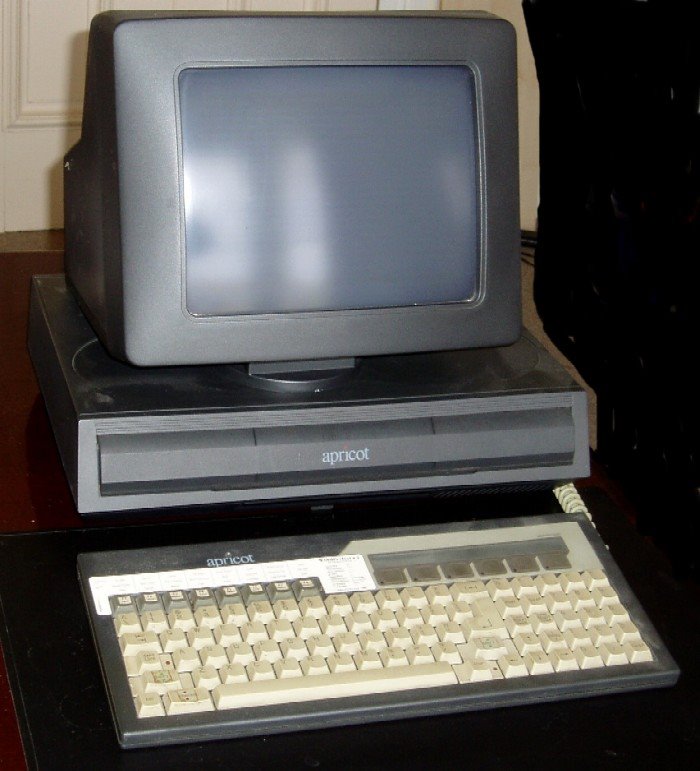
Then in 1984 I persuaded my employers to let me buy an ACT Apricot computer for my office: an elegant black thing it was, with a mammoth 256KB of RAM, 20MB Winchester Hard Disk, 12” monitor, Superwriter and Supercalc. (I still have it and no doubt it still works, but I know that if I tried to use it I would be constantly reaching for a non-existent mouse.) I built a padded hood to try to subdue the racket made by the daisy-wheel printer, but it was still deafening, so I had to get a dot matrix printer as well; this made a nasty buzzing sound and produced horrid blurred print.
All this lot cost £5,316.
This meant that I then had not only the evenings and weekends but also the working days to play computers, so I leapt into MSDOS with delight and had fun with batch files and all that sort of thing. Also, by the end of 1985 I had launched into what passed for DTP before DTP was invented. There was something called Managers’ Alphanumeric General Interface Code (MAGIC). You typed your text into your word processor interspersed with codes, rather like HTML tags, such as [m18][f24][s14][d18]; this one means 18 pica measure, Garamond 14 points with line space 18 points. Then you sent the file to photo-typesetters and if you were lucky back came the artwork ready to send to the printers.
Obviously, this was a fairly laborious procedure, but I produced such things as 120-page handbooks with it for a while until eventually DTP software and desktop laser printers arrived and life became much easier. By 1987 I had acquired a PC (in those days they were called "IBM-compatible") running the appalling Windows 2.0 (it was clear to me that this Windows thing would never catch on). I also bought the first non-Mac version of Aldus PageMaker (now owned by Adobe and no longer being developed) and an early version of Excel.
That was the last sea change in my relationship with computers. Since then it has just been more of the same, really; over the years I have bought perhaps 25 PCs, some for my office, some for me (and my wife) and some on behalf of a dozen charities with which I became involved. I got them from a variety of suppliers - international, national, local - and reached one conclusion about dealing with computer firms: that computer engineers are, on the whole, honest, friendly and good at what they do, while computer salesmen are, on the whole, arrogant, stupid and incompetent.
In the last few years, of course, the internet has arrived and this is now a major source of pleasure for me. I have made a few websites or webpages - for myself, for a charity, for an arts group, for a house to let, for a caterer, for a café, for a dramatic soprano. I am not much good at these - I can only do very simple ones, very slowly - but this modest skill is in demand because I don't charge anything.
And I typeset small publications with dear old Pagemaker 6.5 and make little databases with Excel 2002 and, of course, I've got bloody Windows XP.
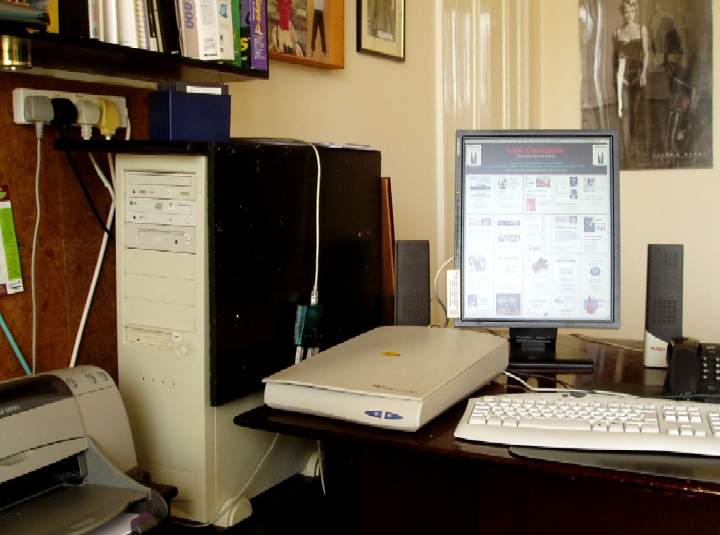 But what's the use of all that hardware and software if it will not run BOUM! with its little red bouncing hearts?
Subscribe to:
Posts (Atom)