


In my last post I described a little test I made to see if it was true that women are more superstitious than men. Knowing that among my readers are a number of otherwise sensible women who would find it totally unacceptable that I should consider the suggestion valid, I fully expected that one or more of them would take issue with me.
But none have done so. On the contrary, one comment came from an irresponsible barfly friend of mine called Grumio, who treated the project with typical flippancy, and another from Outeast, one of OMF's wise and percipient regular readers who has taken the trouble to conduct some more serious research to confirm or disprove my point. He used a datafile from the American 1972-2008 General Social Survey, a very useful tool for this kind of research, though he points out that the data relates only to men and women in the USA, so it may be that any conclusion drawn from it 'reflects primarily a cultural construct rather than anything innate', and he makes a couple of other caveats.
My own conclusion seems to be well supported: Women believe in weird things more than men do.
[I know nothing of Outeast's background, as he has always refused to reveal anything at all about himself. He is probably male but for all I know may be a Harvard Professor of Philosophy or possibly a Uyghur herdsman. Anyway, I am grateful both to him and to Grumio: they have cheered me up after a week of bad news from the U.S.]
Showing posts with label sex/gender. Show all posts
Showing posts with label sex/gender. Show all posts
Monday, 8 November 2010

Wednesday, 3 November 2010
So you're a Scorpio? Wow!
Some time ago ago I carried out a little survey to try to establish whether or not women, in general, taking it by and large, on the whole and with reservations, might be thought to be—or tend to be—more, perhaps marginally, superstitious than men. This was a frivolous exercise, and I did not imagine anyone would consider it tendentious or even take it seriously.
But I was wrong. My conclusion ("Yes, possibly") evidently festered in the mind of an acquaintance of mine until she could rein in her contempt no longer, and now, four years later, she has sent me an email expressing the view that what I had written was monstrously unreasonable, bigoted, mendacious and shameful, though supplying no evidence to support her contention that my conclusion was wrong.
This attack has hurt me deeply. While I am prepared to admit that such strictures could be applied with some truth to much of the content of OMF, I do not believe they can be levelled at the post in question, so over the past few days during which I had few major commitments (any fewer, and there would have been no need for me to get up in the mornings), I have gone to the trouble of repeating the enquiry using a larger sample.
It was based on the same premise as the earlier survey: that the desire to reveal your astrological sign to the world by noting it in your blog profile indicates a belief that this information says something interesting about you. There is no reason to believe this unless you think that there is something in astrology and that it is not just silly rubbish; in other words you have at least one superstitious belief.
So I looked at a hundred blogs which feature a personal profile, fifty written by women and fifty by men. Of these, 11 (22%) of the men and 36 (72%) of the women list their astrological sign.
This does not prove that women are more than three times as likely as men to be superstitious, of course: such a conclusion would be quite unwarranted.
But I was wrong. My conclusion ("Yes, possibly") evidently festered in the mind of an acquaintance of mine until she could rein in her contempt no longer, and now, four years later, she has sent me an email expressing the view that what I had written was monstrously unreasonable, bigoted, mendacious and shameful, though supplying no evidence to support her contention that my conclusion was wrong.
This attack has hurt me deeply. While I am prepared to admit that such strictures could be applied with some truth to much of the content of OMF, I do not believe they can be levelled at the post in question, so over the past few days during which I had few major commitments (any fewer, and there would have been no need for me to get up in the mornings), I have gone to the trouble of repeating the enquiry using a larger sample.
It was based on the same premise as the earlier survey: that the desire to reveal your astrological sign to the world by noting it in your blog profile indicates a belief that this information says something interesting about you. There is no reason to believe this unless you think that there is something in astrology and that it is not just silly rubbish; in other words you have at least one superstitious belief.
So I looked at a hundred blogs which feature a personal profile, fifty written by women and fifty by men. Of these, 11 (22%) of the men and 36 (72%) of the women list their astrological sign.
This does not prove that women are more than three times as likely as men to be superstitious, of course: such a conclusion would be quite unwarranted.
Wednesday, 28 January 2009
Blokeism, laddishness and other specialities
Some blogs cater exclusively for those with particular professional or cultural interests: if you are a proctologist, say, or a Karlheinz Stockhausen fan, you can exchange news and discuss controversial issues with others with the same enthusiasm. These blogs are not widely read, and the only quality they generally have in common is that they rarely feature any good jokes or funny pictures.
There are other blogs which cover a wider range of topics but are still restricted in scope, and the most common of these are blogs which appeal to blokes or lads. The OED describes both these words as colloquial (mainly British), so for the benefit of North Americans who may be unfamiliar with their usage here are the OED definitions of them or their derivatives:
blokeish adj.
Characteristic of a man, or of men socializing together; straightforward, affable, bluff, down-to-earth (or keen to appear so); typically or stereotypically male in behaviour or interests. Freq. also depreciative (esp. with reference to the behaviour of all-male social groups): chauvinistic, boorish.
lad n.
A young man characterized by his enjoyment of social drinking, sport, and other activities considered to be male-oriented, his engagement in casual sexual relationships, and often by attitudes or behaviour regarded as irresponsible, sexist, or boorish; (usually) one belonging to a close-knit social group.
lad mag n.
a magazine aimed at young men, featuring esp. interviews with and pin-ups of female celebrities.
Then there are blogs for the opposite sex:
girly adj.
1a Characteristic of or befitting a girl; girlish. Also: effeminate. Freq. depreciative.
1b Involving girls or women and girlish or female concerns.
2 Of a publication, entertainment, etc.: featuring young women, usually naked or partially naked, in erotic contexts.
...and, of course, there are feminist blogs, which come under 1b above, but are really in a special category of their own.
Blogs written for any of these groups vary enormously in sophistication and literacy, but all are specialised and therefore with very limited appeal. Other Men's Flowers tries to straddle their constituencies and to cater for the interests of them all by providing the lads with notes on such topics as the latest weaponry, moustaches, powerful cars, skateboarding, lewd Ice Age implements, beach volleyball and booze.
...and the girls with comprehensive information on washing up, shopping, famous women writers and composers, where to find gigolos, astrology and crochet.
There are other blogs which cover a wider range of topics but are still restricted in scope, and the most common of these are blogs which appeal to blokes or lads. The OED describes both these words as colloquial (mainly British), so for the benefit of North Americans who may be unfamiliar with their usage here are the OED definitions of them or their derivatives:
blokeish adj.
Characteristic of a man, or of men socializing together; straightforward, affable, bluff, down-to-earth (or keen to appear so); typically or stereotypically male in behaviour or interests. Freq. also depreciative (esp. with reference to the behaviour of all-male social groups): chauvinistic, boorish.
lad n.
A young man characterized by his enjoyment of social drinking, sport, and other activities considered to be male-oriented, his engagement in casual sexual relationships, and often by attitudes or behaviour regarded as irresponsible, sexist, or boorish; (usually) one belonging to a close-knit social group.
lad mag n.
a magazine aimed at young men, featuring esp. interviews with and pin-ups of female celebrities.
Then there are blogs for the opposite sex:
girly adj.
1a Characteristic of or befitting a girl; girlish. Also: effeminate. Freq. depreciative.
1b Involving girls or women and girlish or female concerns.
2 Of a publication, entertainment, etc.: featuring young women, usually naked or partially naked, in erotic contexts.
...and, of course, there are feminist blogs, which come under 1b above, but are really in a special category of their own.
Blogs written for any of these groups vary enormously in sophistication and literacy, but all are specialised and therefore with very limited appeal. Other Men's Flowers tries to straddle their constituencies and to cater for the interests of them all by providing the lads with notes on such topics as the latest weaponry, moustaches, powerful cars, skateboarding, lewd Ice Age implements, beach volleyball and booze.
...and the girls with comprehensive information on washing up, shopping, famous women writers and composers, where to find gigolos, astrology and crochet.
Thursday, 24 July 2008
Not suitable for children
One of the Psycho Buildings in the exhibition at the Hayward Gallery (until 25th August) is a cinema, or rather what the creator, Slovenian artist Thomas Putrih, calls an eclectic baroque theatre, though neither of these adjectives seem to me to be in any way appropriate.
It is showing short films by other artists and these weren't particularly baroque or eclectic either. We did not sit through them all and probably didn't miss very much, but one of them we did quite like. It was called Little Frank and His Carp and was filmed at the Guggengeim Bilbao; this has a fish-shaped tower at its heart which I suppose could be a carp, but Little Frank does not appear.
The film follows performance artist Andrea Fraser in the role of a museum visitor listening to the official audio guide and its climax (I use the word advisedly) comes when the guide encourages her to caress the 'powerfully sensual' curves of the fish. This she does, with a will.
When her thong came into view, we heard some commands being hissed at the school party behind us and a dozen (not very young) children scampered down the gangway and were ushered out. This was a sensible precaution on the part of the teachers, for the accounts of the visit given later to the parents might very likely give rise to some concerned enquiries of the school authorities, or even complaints.
What surprised me was the children's reaction: the commands were obeyed instantly, with no giggling. This showed commendable discipline and sense of decorum, but none of them even attempted to dawdle, which suggests that they had been inculcated with prudery. Or maybe they just lacked curiosity.
It is showing short films by other artists and these weren't particularly baroque or eclectic either. We did not sit through them all and probably didn't miss very much, but one of them we did quite like. It was called Little Frank and His Carp and was filmed at the Guggengeim Bilbao; this has a fish-shaped tower at its heart which I suppose could be a carp, but Little Frank does not appear.
The film follows performance artist Andrea Fraser in the role of a museum visitor listening to the official audio guide and its climax (I use the word advisedly) comes when the guide encourages her to caress the 'powerfully sensual' curves of the fish. This she does, with a will.
When her thong came into view, we heard some commands being hissed at the school party behind us and a dozen (not very young) children scampered down the gangway and were ushered out. This was a sensible precaution on the part of the teachers, for the accounts of the visit given later to the parents might very likely give rise to some concerned enquiries of the school authorities, or even complaints.
What surprised me was the children's reaction: the commands were obeyed instantly, with no giggling. This showed commendable discipline and sense of decorum, but none of them even attempted to dawdle, which suggests that they had been inculcated with prudery. Or maybe they just lacked curiosity.
Wednesday, 23 January 2008
Poetic licence
I never expect anything in the way of thrills or titillation when I scan through my local newspaper, but this week there wasn't even much in the way of interest: a naughty vicar, "Gales damage a school roof", "Doris is 104" and "Builder head-butted off-duty policeman", and that was about it.
Until, with a shock, I encountered an item which left me open-mouthed and which, if TV news and the national papers are on their toes, must surely soon become a hot topic throughout the country. I leave out the names, but here is the piece (honest, no kidding):
Wordsmiths are being invited to compete in a prophylactic poetry competition to win £50 in vouchers. [Our local] Primary Care Trust's chlamydia screening programme and [-]'s Pharmacy have joined forces to run the contest which covers two age groups. Young people aged between 16 and 25 are being asked to pen a poem using the word chlamydia, while over 25s are called upon to write a piece containing the word contraception, or a form of contraception.
There are several things to be said about this. For one thing, the rules are somewhat vague: Do they really mean any sort of poem, or do they want some verses which rhyme and/or scan? Must chlamydia be used in its proper context and refer to the infection or can it be treated as just a word? It would make things much easier if could be used as a proper name, so that you could submit a sentimental ode titled To Chlamydia, with a line similar to the one Ernest Dowson very nearly wrote: I have been true to thee, Chlamydia, in my fashion.
If it must be used as a medical term, on the other hand, then the poems would have to outline the bacteriological background, symptoms and treatment (what else is there to write about on this subject?), and references to C. trachomatis, purulent exudate and Azithromycin would have to be featured; these are very tricky things to work into even the loosest rhyming scheme or metre.
For the older competitors, contraception as a subject offers lots of possibilities, since no particular approach is specified. The poem could be lyrical, romantic, theologically controversial or merely practical. In the latter case, the various methods alone provide plenty to say; references to them in popular song go back to 1930, with Ira Gershwin's lyrics to I Got Rhythm.
This competition seems to me to be much more difficult than one I set before Christmas, and that attracted only five entries. Somehow the sponsors will have to ensure that there are at least two entries in their Prophylactic Poetry Contest, even if they have to write them themselves, for the winning poems are to be displayed at the town's main shopping centre on February 9th to mark National Contraceptive Awareness Week. Anyway, I shall not fail to be there to see how the young poets of the town have risen to the challenge.
Until, with a shock, I encountered an item which left me open-mouthed and which, if TV news and the national papers are on their toes, must surely soon become a hot topic throughout the country. I leave out the names, but here is the piece (honest, no kidding):
Wordsmiths are being invited to compete in a prophylactic poetry competition to win £50 in vouchers. [Our local] Primary Care Trust's chlamydia screening programme and [-]'s Pharmacy have joined forces to run the contest which covers two age groups. Young people aged between 16 and 25 are being asked to pen a poem using the word chlamydia, while over 25s are called upon to write a piece containing the word contraception, or a form of contraception.
There are several things to be said about this. For one thing, the rules are somewhat vague: Do they really mean any sort of poem, or do they want some verses which rhyme and/or scan? Must chlamydia be used in its proper context and refer to the infection or can it be treated as just a word? It would make things much easier if could be used as a proper name, so that you could submit a sentimental ode titled To Chlamydia, with a line similar to the one Ernest Dowson very nearly wrote: I have been true to thee, Chlamydia, in my fashion.
If it must be used as a medical term, on the other hand, then the poems would have to outline the bacteriological background, symptoms and treatment (what else is there to write about on this subject?), and references to C. trachomatis, purulent exudate and Azithromycin would have to be featured; these are very tricky things to work into even the loosest rhyming scheme or metre.
For the older competitors, contraception as a subject offers lots of possibilities, since no particular approach is specified. The poem could be lyrical, romantic, theologically controversial or merely practical. In the latter case, the various methods alone provide plenty to say; references to them in popular song go back to 1930, with Ira Gershwin's lyrics to I Got Rhythm.
This competition seems to me to be much more difficult than one I set before Christmas, and that attracted only five entries. Somehow the sponsors will have to ensure that there are at least two entries in their Prophylactic Poetry Contest, even if they have to write them themselves, for the winning poems are to be displayed at the town's main shopping centre on February 9th to mark National Contraceptive Awareness Week. Anyway, I shall not fail to be there to see how the young poets of the town have risen to the challenge.
Monday, 19 March 2007
The rock icon and the B-movie star
As I have never felt the need—or the inclination—to follow closely the careers of 1960s record producers, it is not surprising that I had not heard of a man called Phil Spector until I saw a whole page devoted to him in the Guardian last Saturday. It was reported that he murdered a “blond, leggy Californian” called Lana Clarkson in 2003 by blowing off her jaw with a 36-calibre Colt, which he then put under her left leg. Or didn’t, as the case may be, or rather, as the jury will decide: next week he is to go on trial in Los Angeles for the alleged crime. He asserts that it was an “accidental suicide”.
We are told that for his court appearances he has prepared Cuban-heeled boots, a blond Afro hairstyle, tinted glasses, frock coats and jewel-encrusted brooches, and that he has a reputation as an “eccentric, unpredictable control freak, as likely to scream profanities at the person nearest to him as to pull a gun on them”, and to wear different guns to match his outfits.
 Nothing surprising there then, just an everyday story of Hollywood folk. I would have turned the page without pausing had the article not featured a photo of Phil looking exactly like my great-aunt Emily (apart, of course, from the black shirt and chalk-striped suit; Phil’s, I mean). This caught my attention and I read the whole piece carefully to see if he was like her in other ways: I came to the conclusion that he was not; well, not really.
Then I saw that the unfortunate Lana was described as “a 40-year-old actor and waitress”. The actor/actress thing is all sorted out nowadays, but waiter/waitress? Why be inconsistent within a single sentence? I suppose if they had written “actor and waiter” the first reaction would have been to think that Lana is a funny name for a man, until you read on and found that she had been a sex-bomb wife in an 80s movie, which had confirmed her position as a Hollywood bimbo.
Before any of my feminist friends add reproachful comments to this post, I should say that none of these words are mine; I am merely quoting the Guardian, well known for its generally contemptuous attitude towards women and the rabid misogyny of its writers.
We are told that for his court appearances he has prepared Cuban-heeled boots, a blond Afro hairstyle, tinted glasses, frock coats and jewel-encrusted brooches, and that he has a reputation as an “eccentric, unpredictable control freak, as likely to scream profanities at the person nearest to him as to pull a gun on them”, and to wear different guns to match his outfits.
 Nothing surprising there then, just an everyday story of Hollywood folk. I would have turned the page without pausing had the article not featured a photo of Phil looking exactly like my great-aunt Emily (apart, of course, from the black shirt and chalk-striped suit; Phil’s, I mean). This caught my attention and I read the whole piece carefully to see if he was like her in other ways: I came to the conclusion that he was not; well, not really.
Then I saw that the unfortunate Lana was described as “a 40-year-old actor and waitress”. The actor/actress thing is all sorted out nowadays, but waiter/waitress? Why be inconsistent within a single sentence? I suppose if they had written “actor and waiter” the first reaction would have been to think that Lana is a funny name for a man, until you read on and found that she had been a sex-bomb wife in an 80s movie, which had confirmed her position as a Hollywood bimbo.
Before any of my feminist friends add reproachful comments to this post, I should say that none of these words are mine; I am merely quoting the Guardian, well known for its generally contemptuous attitude towards women and the rabid misogyny of its writers.
Wednesday, 7 February 2007
Solangism
Nicolas Chauvin was a devoted follower of Napoleon in spite of being wounded 17 times, disfigured and maimed, in his service. In post-Napoleonic France this earned the poor fellow ridicule and derision, and after he had been mocked in several plays the word chauvinisme was coined as a term for excessive nationalistic fervour (we dropped the "e", of course). In recent years, prefixed by “male”, it also denotes misogynistic contempt.
I have not been able to establish whether Nicolas ever married. Let us assume that he did, and that his wife was called Solange, which for all I know she might have been. Then we could coin a new word to describe the misandrist equivalent of a male chauvinist.
A solangist friend of mine—let us call her Vespertilia, for that is not her name—holds firmly to the belief that women would be perfectly well able to follow any occupation or sport had they not been oppressed by men for many millennia and prevented from engaging in most of them by men’s selfishness. If there were no discrimination and the right training was on offer, she says, women could equal or surpass men’s achievements in every field. and she rejects any suggestion that few women would have the desire to excel as, say, coal-miners, serial killers, caber-tossers, Royal Marine Commandos, hangpersons, front row forwards, bass-baritones, waste disposal operatives and so on. “Ah, but with encouragement they might”, she says firmly.
She is also very hot on gender-specific words and feels strongly about actress. If acting is acting, and there should be no distinction by gender between practitioners, of course they can all be called actors, but then logically we should demand that they compete together for awards, and there can be no “Best Actress” any more. This would probably be OK for your Denches and your Mirrens and your Blanchetts, and bully for the little dears, but in a bad year for male actors even the finest among them might have to be content with lesser trinkets such as Best Supporting Actor in a Foreign-Language Wildlife Film, which seems a bit hard.
“So what?”, says Vespertilia, “Awards are a load of silly rubbish anyway.”
Well, it’s a point of view.
I have not been able to establish whether Nicolas ever married. Let us assume that he did, and that his wife was called Solange, which for all I know she might have been. Then we could coin a new word to describe the misandrist equivalent of a male chauvinist.
A solangist friend of mine—let us call her Vespertilia, for that is not her name—holds firmly to the belief that women would be perfectly well able to follow any occupation or sport had they not been oppressed by men for many millennia and prevented from engaging in most of them by men’s selfishness. If there were no discrimination and the right training was on offer, she says, women could equal or surpass men’s achievements in every field. and she rejects any suggestion that few women would have the desire to excel as, say, coal-miners, serial killers, caber-tossers, Royal Marine Commandos, hangpersons, front row forwards, bass-baritones, waste disposal operatives and so on. “Ah, but with encouragement they might”, she says firmly.
She is also very hot on gender-specific words and feels strongly about actress. If acting is acting, and there should be no distinction by gender between practitioners, of course they can all be called actors, but then logically we should demand that they compete together for awards, and there can be no “Best Actress” any more. This would probably be OK for your Denches and your Mirrens and your Blanchetts, and bully for the little dears, but in a bad year for male actors even the finest among them might have to be content with lesser trinkets such as Best Supporting Actor in a Foreign-Language Wildlife Film, which seems a bit hard.
“So what?”, says Vespertilia, “Awards are a load of silly rubbish anyway.”
Well, it’s a point of view.
Friday, 15 December 2006
By any other name
The appalling events around Ipswich have inspired many thousands of words of media comment, much of it trite, prurient or fatuous. One piece I saw, by a female journalist who is usually fairly level-headed, was headed “Decriminalisation is the only way to safety” a pronouncement which apparently refers to the Green Party’s policy on prostitution.
Selling sex for money is not, of course, illegal in the UK (there is a useful summary here of laws throughout the EU), so it is presumably the ancillary activities such as advertising it, joining together in a co-operative, soliciting and perhaps pimping and brothel-keeping which they think should be legalised. To make her own version of the proposal absolutely clear, the journalist went on to say “we should stop regarding sex work as having any sort of stigma… It should be a job choice like any other…”
In other words, there’s nothing wrong with prostitution, we just have to tidy it up a bit, amend our attitude and regard it as something perfectly acceptable, and all will be O.K.
Exactly how this will work is not spelt out, and perhaps the Green policy-makers cannot see that a legal, properly regulated trade in prostitution, with every kind of protection afforded both to free-lance workers and employees—Health and Safety and employment rules properly enforced (minimum wages, contracts, pensions and so on), and the Inland Revenue keeping a watchful eye on tax evasion—would be a multi-billion pound industry. It would from the start attract the attention of our top entrepreneurs, not only as employers but in providing all the services needed, such as training, careers advice in schools, selection (head-hunting at universities) and the establishment of professional standards and qualifications. And, of course, marketing: Richard Branson would have a head start here with his already widely-known brand name.
Male prostitution, I suppose, might still remain a cottage industry.
All this, of course, is lunacy. The article prompted a sensible reply from someone who has seen what happens in places where there is legalised prostitution, and knows that it singularly fails to achieve what its proponents imagine. But it would not be fair to think of them as merely simple-minded: if you have a naive idea of what the trade is like, then the daffy notion that prostitution could become “a job choice like any other” arises naturally from adopting the term “sex worker”. It was George Orwell who first showed the extent to which attitudes can be moulded and ideas changed simply by controlling the words used to describe something: you don’t change the thing, but Newspeak makes you regard it quite differently.
I wrote about this phenomenon in the context of prostitution a couple of years ago in a post called Opinion poll; this was a feeble and jokey piece mainly concerned with Sainsbury’s check-out girls, but somehow it evoked some lively comments from women writers, one of whom provided a fascinating magisterial survey of terms for prostitutes in their social context through the ages (whores, courtesans and so on). I contributed enthusiastically for a while but we got side-tracked into talking about death, putrefaction, the Dewey Decimal system and other irrelevancies, and then a soi-disant dyke from Prescott, AZ, joined in and I felt that the discussion had wandered off the point and it was time to end it.
See here for a fair comment (from another female journalist) on what the trade is really like and why the idea of de-stigmatising it is daft.
Selling sex for money is not, of course, illegal in the UK (there is a useful summary here of laws throughout the EU), so it is presumably the ancillary activities such as advertising it, joining together in a co-operative, soliciting and perhaps pimping and brothel-keeping which they think should be legalised. To make her own version of the proposal absolutely clear, the journalist went on to say “we should stop regarding sex work as having any sort of stigma… It should be a job choice like any other…”
In other words, there’s nothing wrong with prostitution, we just have to tidy it up a bit, amend our attitude and regard it as something perfectly acceptable, and all will be O.K.
Exactly how this will work is not spelt out, and perhaps the Green policy-makers cannot see that a legal, properly regulated trade in prostitution, with every kind of protection afforded both to free-lance workers and employees—Health and Safety and employment rules properly enforced (minimum wages, contracts, pensions and so on), and the Inland Revenue keeping a watchful eye on tax evasion—would be a multi-billion pound industry. It would from the start attract the attention of our top entrepreneurs, not only as employers but in providing all the services needed, such as training, careers advice in schools, selection (head-hunting at universities) and the establishment of professional standards and qualifications. And, of course, marketing: Richard Branson would have a head start here with his already widely-known brand name.
Male prostitution, I suppose, might still remain a cottage industry.
All this, of course, is lunacy. The article prompted a sensible reply from someone who has seen what happens in places where there is legalised prostitution, and knows that it singularly fails to achieve what its proponents imagine. But it would not be fair to think of them as merely simple-minded: if you have a naive idea of what the trade is like, then the daffy notion that prostitution could become “a job choice like any other” arises naturally from adopting the term “sex worker”. It was George Orwell who first showed the extent to which attitudes can be moulded and ideas changed simply by controlling the words used to describe something: you don’t change the thing, but Newspeak makes you regard it quite differently.
I wrote about this phenomenon in the context of prostitution a couple of years ago in a post called Opinion poll; this was a feeble and jokey piece mainly concerned with Sainsbury’s check-out girls, but somehow it evoked some lively comments from women writers, one of whom provided a fascinating magisterial survey of terms for prostitutes in their social context through the ages (whores, courtesans and so on). I contributed enthusiastically for a while but we got side-tracked into talking about death, putrefaction, the Dewey Decimal system and other irrelevancies, and then a soi-disant dyke from Prescott, AZ, joined in and I felt that the discussion had wandered off the point and it was time to end it.
See here for a fair comment (from another female journalist) on what the trade is really like and why the idea of de-stigmatising it is daft.
Monday, 16 October 2006
My horoscope (1)
If you want to annoy a militant feminist (and who, from time to time, does not?), it is necessary only to make some confident pronouncement along the lines of "women are more (or less) [….] than men, of course". The response will be to the effect that (a) they aren’t and (b) if they are, it is because of social conditioning/centuries of repression by men/under-nourishment, etc. This response will in some cases be quite justified—generalisations about gender differences are often inaccurate and to be deplored.
However, there is one which I have always taken for granted and which can be attributed, as far as I can imagine, only to some innate disparity between the male and the female psyche. It is this: women tend to be more superstitious than men.
My belief that this is so was based merely on casual observation, until it was questioned the other day by a (totally unsuperstitious) woman for whose intellect I have the greatest respect. "Nonsense", she said, robustly, "there are just as many men as women who believe in preposterous things". Clearly, my empirical belief would have to be tested.
I decided to pick one particular superstition, since many seem to appeal to men and women equally (homeopathy, say); I couldn’t think of one which mostly men go for (though there must be some: UFOs, possibly?). No-one much thinks about spiritualism these days, and I didn’t want to look at religious beliefs because they are too heavy-weight a subject for a playful little enquiry like this.
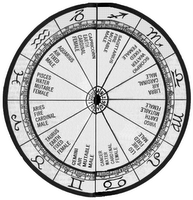 So I chose astrology. Judging by the space given to it in magazines, and the serious money being made by the charlatans who peddle it, an interest in this drivel must be widespread, even if people who look up their stars are not necessarily taking any of it seriously. But is it mostly men or women who actually read the stuff?
I have to say that my results were as conclusive as any amateur, unscientific test (small and unadjusted sample and generally poor methodology) could possibly produce.
I began by asking friends and family whether they believed in astrology, but I couldn’t find anyone who gave any kind of positive answer (sceptical lot, my friends and family), though a few said they thought it was a bit of fun . Then it occurred to me that I could widen the field of enquiry quite simply, without going to much trouble. Most blogs offer some kind of profile of the author ("About Me") and the bloghoster provides suggestions for personal details to fill in: occupation, place of residence, gender, interests, favourite (sorry, favorite) books, films, Astrological Sign and Zodiac Year. I guessed that anyone who thinks it worthwhile to fill in these last two details may not actually believe in astrology but probably at least regards it as something more than a silly superstition and a lucrative fraud.
So over two or three months I looked at all the profiles linked to any blogs I happened to visit. This gave me a sample of 32 men and 46 women, and I found that 15.6% of the men and 73.7% of the women wanted the world to know that they were born under the sign of Capricorn, in the year of the Ox*, or whatever.
I believe this shows that women tend to be more superstitious than men.
Donald Swann had a song which gave me the title for this post:
MY HOROSCOPE
Jupiter's passed through Orion,
And come into conjunction with Mars.
Saturn is wheeling through infinite space,
To its pre-ordained place in the stars.
And I gaze at the planets in wonder,
At the trouble and time they expend.
All to warn me to be careful.....
In dealings involving a friend!
[More about horoscopes HERE]
*Actually, Chinese star signs have nothing to do with astrology, though horoscopes have developed around them much as monthly horoscopes in the West have been developed for the different signs of the zodiac. For example, a Chinese horoscope may predict that a person born in the Year of the Horse would be, "cheerful, popular, and loves to compliment others". These horoscopes are amusing, but not taken seriously by the Chinese.
Every year is assigned an animal name or "sign" according to a repeating cycle: Rat, Ox, Tiger, Rabbit, Dragon, Snake, Horse, Sheep, Monkey, Rooster, Dog, and Boar; every twelve years the same animal name or "sign" would reappear.
Thus, the signs serve a useful social function for finding out people’s ages, avoiding having to ask directly how old a person is; you can just ask what is his or her animal sign. This would place that person’s age within a cycle of 12 years, and with a bit of common sense the exact age can be deduced.
However, there is one which I have always taken for granted and which can be attributed, as far as I can imagine, only to some innate disparity between the male and the female psyche. It is this: women tend to be more superstitious than men.
My belief that this is so was based merely on casual observation, until it was questioned the other day by a (totally unsuperstitious) woman for whose intellect I have the greatest respect. "Nonsense", she said, robustly, "there are just as many men as women who believe in preposterous things". Clearly, my empirical belief would have to be tested.
I decided to pick one particular superstition, since many seem to appeal to men and women equally (homeopathy, say); I couldn’t think of one which mostly men go for (though there must be some: UFOs, possibly?). No-one much thinks about spiritualism these days, and I didn’t want to look at religious beliefs because they are too heavy-weight a subject for a playful little enquiry like this.
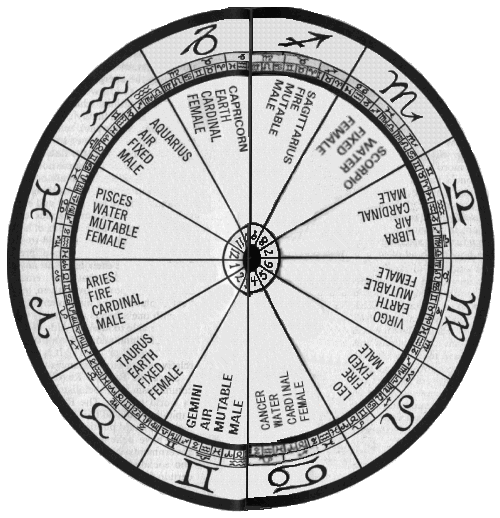 So I chose astrology. Judging by the space given to it in magazines, and the serious money being made by the charlatans who peddle it, an interest in this drivel must be widespread, even if people who look up their stars are not necessarily taking any of it seriously. But is it mostly men or women who actually read the stuff?
I have to say that my results were as conclusive as any amateur, unscientific test (small and unadjusted sample and generally poor methodology) could possibly produce.
I began by asking friends and family whether they believed in astrology, but I couldn’t find anyone who gave any kind of positive answer (sceptical lot, my friends and family), though a few said they thought it was a bit of fun . Then it occurred to me that I could widen the field of enquiry quite simply, without going to much trouble. Most blogs offer some kind of profile of the author ("About Me") and the bloghoster provides suggestions for personal details to fill in: occupation, place of residence, gender, interests, favourite (sorry, favorite) books, films, Astrological Sign and Zodiac Year. I guessed that anyone who thinks it worthwhile to fill in these last two details may not actually believe in astrology but probably at least regards it as something more than a silly superstition and a lucrative fraud.
So over two or three months I looked at all the profiles linked to any blogs I happened to visit. This gave me a sample of 32 men and 46 women, and I found that 15.6% of the men and 73.7% of the women wanted the world to know that they were born under the sign of Capricorn, in the year of the Ox*, or whatever.
I believe this shows that women tend to be more superstitious than men.
Donald Swann had a song which gave me the title for this post:
MY HOROSCOPE
Jupiter's passed through Orion,
And come into conjunction with Mars.
Saturn is wheeling through infinite space,
To its pre-ordained place in the stars.
And I gaze at the planets in wonder,
At the trouble and time they expend.
All to warn me to be careful.....
In dealings involving a friend!
[More about horoscopes HERE]
*Actually, Chinese star signs have nothing to do with astrology, though horoscopes have developed around them much as monthly horoscopes in the West have been developed for the different signs of the zodiac. For example, a Chinese horoscope may predict that a person born in the Year of the Horse would be, "cheerful, popular, and loves to compliment others". These horoscopes are amusing, but not taken seriously by the Chinese.
Every year is assigned an animal name or "sign" according to a repeating cycle: Rat, Ox, Tiger, Rabbit, Dragon, Snake, Horse, Sheep, Monkey, Rooster, Dog, and Boar; every twelve years the same animal name or "sign" would reappear.
Thus, the signs serve a useful social function for finding out people’s ages, avoiding having to ask directly how old a person is; you can just ask what is his or her animal sign. This would place that person’s age within a cycle of 12 years, and with a bit of common sense the exact age can be deduced.
Friday, 14 July 2006
Men’s and women’s sana in corpore sano
An early rulebook of a sport in which I was involved professionally for some years had a preamble which contained the following charming statement: Throughout these rules, wherever the masculine gender is used it shall be held to embrace the feminine. This was later revised to read clumsily, as something like Where we say “he” we mean “he or she” and so on; obviously if one allows women to join in chaps’ games it must be made clear to them that the rules apply to them as well, otherwise they might try to take advantage.
The Guardian stylebook advises its writers that the word mankind should be avoided and humankind or humanity used instead. The 1926 Fowler’s Modern English Usage merely notes how the word should be pronounced differently to distinguish its two meanings ....with the accent on the second syllable for the ordinary sense of the human race but on the first for the special sense of the males of a family &c.
Those were innocent days. In 1968, according to the OED, the word sexism first entered the language, meaning “the assumption that one sex is superior to the other and the resultant discrimination practised against members of the supposed inferior sex, esp. by men against women; also conformity with the traditional stereotyping of social roles on the basis of sex”, and since then things have become much more complicated.
The modern Fowler (or at any rate Burchfield’s third edition, the best I can do) finds it necessary to provide numerous articles on particular instances of sexist language as well as an extensive essay on the topic in general:
….Feminists and others sympathetic to their views, from about the 1970s onwards, have attacked what they take to be male-favouring terminology of every kind and have scoured the language for suitable evidence and for gender-free substitutes. Their argument hinges on the belief that many traditional uses of the language discriminate against women or render them ‘invisible’ and for these reasons are unacceptable ….When reviewing the Handbook [of Non-Sexist Writing, 1981] the Irish writer Brigid Brophy complained about the ‘leaden literalness of mind’ [of the authors] and ‘their tin ear and insensitivity to the metaphorical content of language’ ….Other writers show in their works that they propose to ignore the shrillest of the advice of feminists ….In English Today (1985) the sociolinguistic scholar Jenny Cheshire concluded ‘There is a built-in masculine bias in English and this does have very serious implications for both the women and the men who use the language. And this bias will not disappear unless there is some measure of conscious reform in the language’
But where is the evidence that ‘conscious reform’ will be accepted by the English-speaking public? None of the significant changes to the language in the past century has come about by ‘conscious reform’. And none will in future unless the whole community singly and collectively decides, not by edict or proclamation, and not even by a vote in the House of Commons, to allow new fashions to be regarded as standard, or at any rate irreversible.
All that sounds unexceptionable, if a bit stuffy, but that was in 1998; some later writers may be more inclined to deplore the inherent sexism of the generic masculine. But most people (good non-gender-specific word, that) can probably see no real alternative.
The Guardian stylebook advises its writers that the word mankind should be avoided and humankind or humanity used instead. The 1926 Fowler’s Modern English Usage merely notes how the word should be pronounced differently to distinguish its two meanings ....with the accent on the second syllable for the ordinary sense of the human race but on the first for the special sense of the males of a family &c.
Those were innocent days. In 1968, according to the OED, the word sexism first entered the language, meaning “the assumption that one sex is superior to the other and the resultant discrimination practised against members of the supposed inferior sex, esp. by men against women; also conformity with the traditional stereotyping of social roles on the basis of sex”, and since then things have become much more complicated.
The modern Fowler (or at any rate Burchfield’s third edition, the best I can do) finds it necessary to provide numerous articles on particular instances of sexist language as well as an extensive essay on the topic in general:
….Feminists and others sympathetic to their views, from about the 1970s onwards, have attacked what they take to be male-favouring terminology of every kind and have scoured the language for suitable evidence and for gender-free substitutes. Their argument hinges on the belief that many traditional uses of the language discriminate against women or render them ‘invisible’ and for these reasons are unacceptable ….When reviewing the Handbook [of Non-Sexist Writing, 1981] the Irish writer Brigid Brophy complained about the ‘leaden literalness of mind’ [of the authors] and ‘their tin ear and insensitivity to the metaphorical content of language’ ….Other writers show in their works that they propose to ignore the shrillest of the advice of feminists ….In English Today (1985) the sociolinguistic scholar Jenny Cheshire concluded ‘There is a built-in masculine bias in English and this does have very serious implications for both the women and the men who use the language. And this bias will not disappear unless there is some measure of conscious reform in the language’
But where is the evidence that ‘conscious reform’ will be accepted by the English-speaking public? None of the significant changes to the language in the past century has come about by ‘conscious reform’. And none will in future unless the whole community singly and collectively decides, not by edict or proclamation, and not even by a vote in the House of Commons, to allow new fashions to be regarded as standard, or at any rate irreversible.
All that sounds unexceptionable, if a bit stuffy, but that was in 1998; some later writers may be more inclined to deplore the inherent sexism of the generic masculine. But most people (good non-gender-specific word, that) can probably see no real alternative.
Wednesday, 28 June 2006
Talking proper
“Her English is too good,” he said, “that clearly indicates that she is foreign
For whereas other girls are taught their native language, Englishwomen aren(‘t)….”
Thus did Zoltan Karpathy imagine, wrongly, that he had discovered Eliza Doolittle’s secret. In the period in which My Fair Lady is set, girls—other than upper class ones—weren’t taught anything much about our language. Nowadays they are taught just as much as boys, and may master it rather better. But it remains true that non-native-English-speakers who have had to learn the language sometimes seem to acquire a command of grammar and syntax (if not pronunciation) which puts to shame those who were fortunate enough to have merely absorbed it with their mothers’ milk.
[“…And although she may have studied with an expert dialectician and grammarian,
I.….can…..tell…..that.….she.....was.….born.….HUNGARIAN!”]
For whereas other girls are taught their native language, Englishwomen aren(‘t)….”
Thus did Zoltan Karpathy imagine, wrongly, that he had discovered Eliza Doolittle’s secret. In the period in which My Fair Lady is set, girls—other than upper class ones—weren’t taught anything much about our language. Nowadays they are taught just as much as boys, and may master it rather better. But it remains true that non-native-English-speakers who have had to learn the language sometimes seem to acquire a command of grammar and syntax (if not pronunciation) which puts to shame those who were fortunate enough to have merely absorbed it with their mothers’ milk.
[“…And although she may have studied with an expert dialectician and grammarian,
I.….can…..tell…..that.….she.....was.….born.….HUNGARIAN!”]
Thursday, 22 June 2006
Keeping it loose in midfield
I normally take the feeds from around twenty websites or blogs, though I look at the updates only occasionally, in idle moments.
I was depressed today when I logged on to my reader to find that no less than nine of them, all of which I had previously believed were being written by people with whom I had something in common, and which I had found to contain generally interesting or amusing matter, featured comments about the World Cup, as if the writers felt that they needed to add to the millions of words on the subject which are currently sloshing around the media. And, what’s more, some of them are women, a species I generally admire for their immunity to male obsessions.
Of course, male and female lads alike have every right to go into print with their thoughts on football, if that is what turns them on. Farewell, and every good wish for the future to those nine; time to thin out my feed subscriptions.
I was depressed today when I logged on to my reader to find that no less than nine of them, all of which I had previously believed were being written by people with whom I had something in common, and which I had found to contain generally interesting or amusing matter, featured comments about the World Cup, as if the writers felt that they needed to add to the millions of words on the subject which are currently sloshing around the media. And, what’s more, some of them are women, a species I generally admire for their immunity to male obsessions.
Of course, male and female lads alike have every right to go into print with their thoughts on football, if that is what turns them on. Farewell, and every good wish for the future to those nine; time to thin out my feed subscriptions.
Tuesday, 23 May 2006
Sex with everything
What do the following have in common?
A revolutionary design for affordable houses, a cerise-coloured back-pack, the music of Chopin, a dual-fuel oven and THREE of the gardens at this year's Chelsea Flower Show.
The answer is that over the past week or two I have seen or heard all these things mentioned in the media with the adjective sexy attached.
The OED gives two meanings: a. Concerned with or engrossed in sex, and b. Sexually attractive or provocative, sexually exciting. But it adds also fig. (figurative), which I suppose suggests that it can be applied to virtually anything and has thus become a meaningless cliché.
It is now just an aid to lazy writers and commentators who are saying: “I use this sleek modern word in any context to suggest that I am rather sophisticated although actually I do so because I am too lazy to think of an appropriate adjective”.
It is interesting, in a dull sort of way, that the very first recorded use of the word in print was in 1925, in La Nouvelle Revue Française:
"Depuis que Joyce a publié un livre qu'ils croient ‘sexy’ cet état d'esprit n'a pas d'équivalent français on s'en empare..que sa méthode sert de modèle à des gens qui..se disent surréalistes.
A revolutionary design for affordable houses, a cerise-coloured back-pack, the music of Chopin, a dual-fuel oven and THREE of the gardens at this year's Chelsea Flower Show.
The answer is that over the past week or two I have seen or heard all these things mentioned in the media with the adjective sexy attached.
The OED gives two meanings: a. Concerned with or engrossed in sex, and b. Sexually attractive or provocative, sexually exciting. But it adds also fig. (figurative), which I suppose suggests that it can be applied to virtually anything and has thus become a meaningless cliché.
It is now just an aid to lazy writers and commentators who are saying: “I use this sleek modern word in any context to suggest that I am rather sophisticated although actually I do so because I am too lazy to think of an appropriate adjective”.
It is interesting, in a dull sort of way, that the very first recorded use of the word in print was in 1925, in La Nouvelle Revue Française:
"Depuis que Joyce a publié un livre qu'ils croient ‘sexy’ cet état d'esprit n'a pas d'équivalent français on s'en empare..que sa méthode sert de modèle à des gens qui..se disent surréalistes.
Tuesday, 28 March 2006
Much ruder in Finnish
 In a post last month I traduced the memory of John Donne by suggesting that the title of the comedy series Last of the Summer Wine might have been taken from one of his poems. I am making amends by quoting from an article which shows clearly how wise he was to write in English and not in Finnish.
The article is by Anniina Jokinen of Philadelphia, a distinguished writer who has created a magisterial and much admired website on mediaeval, Renaissance and 17th Century English literature. She was asked (possibly by a monoglot Finn rather hopelessly studying English poetry) to translate one of Donne’s poems into Finnish, and replied as follows:
Firstly, I do not fancy myself a translator of poetry. Secondly, in my opinion Donne translates into Finnish clumsily and poorly—all the subtlety is gone, and whereas the original is coy and veiledly risqué, the end result in Finnish is jarringly vulgar. That said, a translation was requested. Here is the first verse:
ELEGY XX. (Original English)
TO HIS MISTRESS GOING TO BED.
Come, madam, come, all rest my powers defy ;
Until I labour, I in labour lie.
The foe ofttimes, having the foe in sight,
Is tired with standing, though he never fight.
ELEGIA 20 (Finnish translation)
RAKASTAJATTARELLEEN NUKKUMAAN MENNESSÄ.
Tule, neitoseni, tule, kaikkea lepoa voimani kaihtavat;
Siihen asti kunnes uurastan, ponnistelen.
Vihollinen usein, vastustajansa näkösällä,
Väsyy seisomaan valppaana, vaikkei taistelisikaan.
Jarringly vulgar indeed, sufficiently so to make me glad that I never pursued the option of a degree course in Finno-Ugrian Studies. And some of Nils-Aslak Valkeapää’s verse is not just vulgar but downright filthy: the other day I found this phrase of his quoted in print together with its translation into several other languages: Täysravinto aaikuisille kissoille…. I ask you!
On the other hand, there is something admirable about a language in which even a soap salesman is palindromic: saippuakauppias. And Finnish has no gender: the same pronoun hän denotes both he and she.
Friday, 24 March 2006
Early celebrities
As I expected, responses to my offer to answer questions about the Oxford Dictionary of National Biography have come flooding in by email. I shall answer one of them here and the other one in a later post.
Who were the first famous women connected with Britain (i.e. those who died before the end of the fifth century and whose biographies are included in the ODNB?).
Here they are:
Boudicca [Boadicea], queen of the Iceni
Brónach, an Ulster saint
Canir [Cannera], a Munster saint
Cartimandua [Claudia Cartimandua, Julia Cartimandua], queen of the Brigantes
Cranat ingen Buicín, Munster saint
Ercnat ingen Dáire, Ulster saint
Gobnait [Mo Gobnat], Munster saint
Helena [St Helena, Helen, Flavia Julia Helena], mother of the Roman emperor Constantine I
Lallóc, Connacht saint
Non [Nonnita, Non Fendigaid], patron saint of Wales
Ursula [St Ursula], martyr
A couple of queens, some Irish saints, a martyr and a mum: no-one of much interest there, except for Boudicca. Remember, though, that not a great deal was going on that early in these misty isles, and the ODNB doesn’t include the likes of your Cleopatra and your Queen of Sheba.
And their 172 male contemporaries didn't really amount to much either: assorted kings, Romans who visited or were stationed in the British Isles, more martyrs and lots of hairy great chieftains from the Celtic fringes. Very few of this bunch could be described as famous or even interesting.
In other parts of the world, of course, there were thousands of men in those times (and even a few women) whose names are known and who did tremendously important things—building pyramids, bearing the Son of God, inventing gunpowder, smiting the hosts of the Amalekites, raising the dead and all that—which would certainly have earned them a biography in the ODNB if only they hadn’t been foreign.
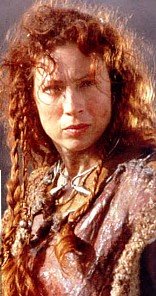
[The ODNB has no picture of the Queen of the Iceni but here's one of Alex Kingston having a go at the role for relaxation after her seven years as ER's Dr Elizabeth Corday.]
Who were the first famous women connected with Britain (i.e. those who died before the end of the fifth century and whose biographies are included in the ODNB?).
Here they are:
Boudicca [Boadicea], queen of the Iceni
Brónach, an Ulster saint
Canir [Cannera], a Munster saint
Cartimandua [Claudia Cartimandua, Julia Cartimandua], queen of the Brigantes
Cranat ingen Buicín, Munster saint
Ercnat ingen Dáire, Ulster saint
Gobnait [Mo Gobnat], Munster saint
Helena [St Helena, Helen, Flavia Julia Helena], mother of the Roman emperor Constantine I
Lallóc, Connacht saint
Non [Nonnita, Non Fendigaid], patron saint of Wales
Ursula [St Ursula], martyr
A couple of queens, some Irish saints, a martyr and a mum: no-one of much interest there, except for Boudicca. Remember, though, that not a great deal was going on that early in these misty isles, and the ODNB doesn’t include the likes of your Cleopatra and your Queen of Sheba.
And their 172 male contemporaries didn't really amount to much either: assorted kings, Romans who visited or were stationed in the British Isles, more martyrs and lots of hairy great chieftains from the Celtic fringes. Very few of this bunch could be described as famous or even interesting.
In other parts of the world, of course, there were thousands of men in those times (and even a few women) whose names are known and who did tremendously important things—building pyramids, bearing the Son of God, inventing gunpowder, smiting the hosts of the Amalekites, raising the dead and all that—which would certainly have earned them a biography in the ODNB if only they hadn’t been foreign.
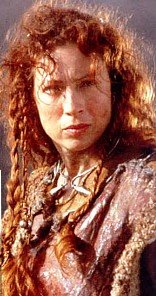
[The ODNB has no picture of the Queen of the Iceni but here's one of Alex Kingston having a go at the role for relaxation after her seven years as ER's Dr Elizabeth Corday.]
Saturday, 4 March 2006
More women
As promised in an earlier post, I have dredged the Oxford Dictionary of National Biography for figures illustrating the gender (they call it “sex”) comparison for the number of entries over the centuries: HERE they are.
I don’t know that there are any tremendously interesting conclusions to be drawn from this, except perhaps that in earlier times you had to be a very extraordinary woman indeed to get yourself written up by posterity, and even now you have to be a lot more extraordinary than a man. It was probably rather a pointless exercise but it did give me a happy hour playing with this fascinating website.
I did notice that men who died in the second half of the nineteenth century qualified for inclusion at a rate (an average of 177 each year) which has never been exceeded or even equalled. This is surprising, since “famous” people of today include many (I mention no names) who wouldn’t have had a chance of having their biographies written if they had lived in earlier times. I suppose that in the nineteenth century there were huge numbers of chaps energetically building railways, writing novels, inventing things, making money and growing spectacular whiskers, thus providing something for biographers to write about. The number of women with biographies didn’t start to increase appreciably until the early twentieth century, perhaps because they seldom made money or had whiskers
In the spirit of generosity which has made Other Men's Flowers a by-word among literati everywhere, I shall be happy to look up things on behalf of sad people who have no access to the ODNB and to answer such questions as Who were the eleven women who died before the fifth century and whose biographies were included? Of course, if this turns out to involve a great deal of work I shall have to charge a small fee, possibly to be passed on to some charity.
The Oxford University Press also publishes the American National Biography. This has 24 volumes, is also on line (though most people have to pay for access), and includes 17,400 people. This is rather less than it should be, I would have thought; although it only goes up to 1999 and they couldn’t have found many to include before the Pilgrim Fathers, apart from the odd Aztec. Hollywood alone must have produced a few thousand people whose fame, if not their lives, makes them eligible for inclusion.
I don’t know that there are any tremendously interesting conclusions to be drawn from this, except perhaps that in earlier times you had to be a very extraordinary woman indeed to get yourself written up by posterity, and even now you have to be a lot more extraordinary than a man. It was probably rather a pointless exercise but it did give me a happy hour playing with this fascinating website.
I did notice that men who died in the second half of the nineteenth century qualified for inclusion at a rate (an average of 177 each year) which has never been exceeded or even equalled. This is surprising, since “famous” people of today include many (I mention no names) who wouldn’t have had a chance of having their biographies written if they had lived in earlier times. I suppose that in the nineteenth century there were huge numbers of chaps energetically building railways, writing novels, inventing things, making money and growing spectacular whiskers, thus providing something for biographers to write about. The number of women with biographies didn’t start to increase appreciably until the early twentieth century, perhaps because they seldom made money or had whiskers
In the spirit of generosity which has made Other Men's Flowers a by-word among literati everywhere, I shall be happy to look up things on behalf of sad people who have no access to the ODNB and to answer such questions as Who were the eleven women who died before the fifth century and whose biographies were included? Of course, if this turns out to involve a great deal of work I shall have to charge a small fee, possibly to be passed on to some charity.
The Oxford University Press also publishes the American National Biography. This has 24 volumes, is also on line (though most people have to pay for access), and includes 17,400 people. This is rather less than it should be, I would have thought; although it only goes up to 1999 and they couldn’t have found many to include before the Pilgrim Fathers, apart from the odd Aztec. Hollywood alone must have produced a few thousand people whose fame, if not their lives, makes them eligible for inclusion.
Thursday, 2 March 2006
Famous people
I have just discovered to my delight that by using my library membership card I can access at home the mighty Oxford Dictionary of National Biography, a collection of the biographies of “55,000 men and women from all walks of life who shaped British history worldwide, from the 4th century BC to the year 2002. It includes not just the great and the good but people who have left a mark for any reason, good, bad, or unusual”. (The printed version has 60,000 pages and costs $7500.)
The women range from Boudicca (d. 60/61AD) to Barbara Castle (d. 2002) and include saints, monarchs and Fanny Adams, (1859–1867), murder victim and source of a colloquial expression. Men in the latest update include four Nobel prize winners and John Entwhistle, bass guitarist of The Who. Really, the only rule applied rigorously in selecting those for inclusion is that they have to be absolutely dead. And, I suppose, famous or infamous in one way or another.
What proportion of all the entries are for women and how does this proportion vary over the entries for the last two millennia? I shall answer these questions in a couple of days time; in the meantime those who are interested in such matters might like to guess at the answer to the first one and then see how close they got. There are 25,600,000 websites on the net which have some reference to feminism (roughly the same as for communism) as well as 47,000 feminist blogs, so it may be that there are other analyses of this kind out there somewhere, but mine will be based on the January update of the online DNB so will at least be more up-to-date than most.
The women range from Boudicca (d. 60/61AD) to Barbara Castle (d. 2002) and include saints, monarchs and Fanny Adams, (1859–1867), murder victim and source of a colloquial expression. Men in the latest update include four Nobel prize winners and John Entwhistle, bass guitarist of The Who. Really, the only rule applied rigorously in selecting those for inclusion is that they have to be absolutely dead. And, I suppose, famous or infamous in one way or another.
What proportion of all the entries are for women and how does this proportion vary over the entries for the last two millennia? I shall answer these questions in a couple of days time; in the meantime those who are interested in such matters might like to guess at the answer to the first one and then see how close they got. There are 25,600,000 websites on the net which have some reference to feminism (roughly the same as for communism) as well as 47,000 feminist blogs, so it may be that there are other analyses of this kind out there somewhere, but mine will be based on the January update of the online DNB so will at least be more up-to-date than most.
Thursday, 19 January 2006
That sounds good
I imagined—and, indeed, asserted—that the title of my previous post was a good one for exciting readers’ interest, but of course in my innocence I had forgotten that a title which promises nothing to the prurient can never be of universal appeal, particularly if it is very long and cryptic in a dull sort of way.
Someone who understands this very well is a major league fruitcake called David Jay Jordan who lives in Canada. His colourful and exuberant website has attracted over a million hits over the last five years and one can see why, for it has something for everyone.
Most visitors to his pages will probably not bother with the links to items like I was one of Canada’s Ten Most Wanted, or Basketball for Jesus, or Geography Mysteries, and indeed these lead to nothing very exciting.
Feminists might want to check out his Wonderful Women webpage covering Twelve Women Apostles of Jesus, Feminine Holy Spirit, Women Warrior Poems, etc, but they will find little to inspire them there.
A great number of his page titles, however, feature the key word which attracts those who spend their days trawling the net for titillation They will want to go straight to Sexual Mysteries; few people in search of lewdness, or even, for the most depraved, a bit of hardcore, could resist the lure of links to Sexual Dancing, Sex Is Divine, Chocolate Sex, Fish Sex and the Bible, and 130 Years of Recreational Sex.
Following these, however, may lead to disappointment; for example, Mr Jordan tells us that the 130 years which sound like fun are merely those between the Creation and the birth of Seth, when Adam and Eve "just kept doing what came natural, until the Lord eventually blessed them with another son to replace their beloved Able".
Someone who understands this very well is a major league fruitcake called David Jay Jordan who lives in Canada. His colourful and exuberant website has attracted over a million hits over the last five years and one can see why, for it has something for everyone.
Most visitors to his pages will probably not bother with the links to items like I was one of Canada’s Ten Most Wanted, or Basketball for Jesus, or Geography Mysteries, and indeed these lead to nothing very exciting.
Feminists might want to check out his Wonderful Women webpage covering Twelve Women Apostles of Jesus, Feminine Holy Spirit, Women Warrior Poems, etc, but they will find little to inspire them there.
A great number of his page titles, however, feature the key word which attracts those who spend their days trawling the net for titillation They will want to go straight to Sexual Mysteries; few people in search of lewdness, or even, for the most depraved, a bit of hardcore, could resist the lure of links to Sexual Dancing, Sex Is Divine, Chocolate Sex, Fish Sex and the Bible, and 130 Years of Recreational Sex.
Following these, however, may lead to disappointment; for example, Mr Jordan tells us that the 130 years which sound like fun are merely those between the Creation and the birth of Seth, when Adam and Eve "just kept doing what came natural, until the Lord eventually blessed them with another son to replace their beloved Able".
Thursday, 20 October 2005
The Monstrous Regiment
This is a an abbreviation of the title of a misogynist 16th century tract by John Knox : The First Blast of the Trumpet Against the Monstrous Regiment of Women.
My own view, based on a lifetime’s observation, is that many women are really quite nice when you get to know them. And their achievements, considering the handicap under which they labour, have sometimes been most laudable; their contribution to literature, for example, cannot altogether be ignored.
I have fond memories of many happy hours spent cuddled up with (for example, wildly at random): Iris, Maeve, Joanna, Vera, Charlotte and Anne (not both at once), Ruth, various Margarets, Virginia, Antonia and many others including, in earlier years, a couple of Phyllises (Bottome and Bentley). I was never attracted to Jilly, Danielle or Barbara and thought Anita a bit depressing and Agatha and Dorothy unreadable, but this was not because of their gender. Never for a moment have I given credence to the theory that the incomparable Jane was actually a man (Arthur, according to some accounts).
In that field, then, there are many names to conjure with; in music, on the other hand, there are few. Dame Ethyl Smyth certainly had a conjurable moniker, but although she was apparently very big in Germany there cannot be many music lovers in whose experience her six operas have figured largely. (This is not to say that she was an uninteresting character: love affairs with Mrs Pankhurst, the wife of the Archbishop of Canterbury, the wife of Queen Victoria’s private secretary, the wife of Brahms’ friend Heinrich von Herzogenberg, and Virginia Woolf; hunted, became mountaineer and bicyclist, had notorious rows with Adrian Boult and conducted the first performance of her own Suffragette Hymn with a toothbrush in Holloway prison. Even apart from her music, it was what you might call a full life.)
In the roll call of famous women composers, that seems to be about it, or so I believed until recently. Some friends who know about music pointed out gently that I should have been aware of (at least) Lily Boulanger, Judith Weir, Nicola LeFanu, and Elizabeth Lutyens, and I was duly ashamed.
On the other hand, I cannot feel that my ignorance of the music of the twelfth-century mystic and saint Hildegard von Bingen was particularly heinous.
In my defence, I suppose it depends on what you mean by famous: it must mean widely known, and not just among experts. Most lettered but not necessarily literary people could put surnames to many of the female authors I list above, which to my mind makes them famous. You couldn't say the same of Lily, Elizabeth, Judith and Nicola, let alone the blessed Hildegard: you'd have be quite a serious music-lover to have heard of them.
Then, the other day I tuned in by chance to a very agreeable piano trio that was unfamiliar to me; I thought it sounded a bit Schubertian or possibly Mendelssohnish. I wasn’t far out: it turned out to be by FANNY Mendelssohn. She was Felix’s sister; he was supportive (though their father wasn't) but she lived in his shadow and 'one can only speculate that had Fanny’s life not been short a number of other important compositions might well have been left to posterity. It may even be that recordings such as this will lead to the revival of other pieces by her that are currently held in the archives of the Prussian State Library'.
I took these comments from the sleeve note of the CD referred to, which I hope someone will give me for Christmas. It also has on it a piano trio by Clara Schumann, about whom I had also been shamefully ignorant. A reviewer wrote: 'I'm sure no-one would have been happier to find two such engaging performances side by side than the two ladies themselves'.
My own view, based on a lifetime’s observation, is that many women are really quite nice when you get to know them. And their achievements, considering the handicap under which they labour, have sometimes been most laudable; their contribution to literature, for example, cannot altogether be ignored.
I have fond memories of many happy hours spent cuddled up with (for example, wildly at random): Iris, Maeve, Joanna, Vera, Charlotte and Anne (not both at once), Ruth, various Margarets, Virginia, Antonia and many others including, in earlier years, a couple of Phyllises (Bottome and Bentley). I was never attracted to Jilly, Danielle or Barbara and thought Anita a bit depressing and Agatha and Dorothy unreadable, but this was not because of their gender. Never for a moment have I given credence to the theory that the incomparable Jane was actually a man (Arthur, according to some accounts).
In that field, then, there are many names to conjure with; in music, on the other hand, there are few. Dame Ethyl Smyth certainly had a conjurable moniker, but although she was apparently very big in Germany there cannot be many music lovers in whose experience her six operas have figured largely. (This is not to say that she was an uninteresting character: love affairs with Mrs Pankhurst, the wife of the Archbishop of Canterbury, the wife of Queen Victoria’s private secretary, the wife of Brahms’ friend Heinrich von Herzogenberg, and Virginia Woolf; hunted, became mountaineer and bicyclist, had notorious rows with Adrian Boult and conducted the first performance of her own Suffragette Hymn with a toothbrush in Holloway prison. Even apart from her music, it was what you might call a full life.)
In the roll call of famous women composers, that seems to be about it, or so I believed until recently. Some friends who know about music pointed out gently that I should have been aware of (at least) Lily Boulanger, Judith Weir, Nicola LeFanu, and Elizabeth Lutyens, and I was duly ashamed.
On the other hand, I cannot feel that my ignorance of the music of the twelfth-century mystic and saint Hildegard von Bingen was particularly heinous.
In my defence, I suppose it depends on what you mean by famous: it must mean widely known, and not just among experts. Most lettered but not necessarily literary people could put surnames to many of the female authors I list above, which to my mind makes them famous. You couldn't say the same of Lily, Elizabeth, Judith and Nicola, let alone the blessed Hildegard: you'd have be quite a serious music-lover to have heard of them.
Then, the other day I tuned in by chance to a very agreeable piano trio that was unfamiliar to me; I thought it sounded a bit Schubertian or possibly Mendelssohnish. I wasn’t far out: it turned out to be by FANNY Mendelssohn. She was Felix’s sister; he was supportive (though their father wasn't) but she lived in his shadow and 'one can only speculate that had Fanny’s life not been short a number of other important compositions might well have been left to posterity. It may even be that recordings such as this will lead to the revival of other pieces by her that are currently held in the archives of the Prussian State Library'.
I took these comments from the sleeve note of the CD referred to, which I hope someone will give me for Christmas. It also has on it a piano trio by Clara Schumann, about whom I had also been shamefully ignorant. A reviewer wrote: 'I'm sure no-one would have been happier to find two such engaging performances side by side than the two ladies themselves'.
Tuesday, 2 August 2005
Versatility in the Ice Age
Phones which take pictures are only one modern example of things which serve more than one purpose; the Garlic-and-Butter-Bean Purée which can also be used for grouting the bathroom is another. Often, neither function is performed particularly well.
It is difficult to say whether this would have been true of the artefact recently discovered in south-western Germany, but anyway it shows that dual-use items were common 28,000 years ago. Such implements, or rather tools, must have been a real boon to the busy prehistoric man (or woman) who was suddenly struck by an urgent need to do a bit of flint-knapping, as they used to call it.
It is difficult to say whether this would have been true of the artefact recently discovered in south-western Germany, but anyway it shows that dual-use items were common 28,000 years ago. Such implements, or rather tools, must have been a real boon to the busy prehistoric man (or woman) who was suddenly struck by an urgent need to do a bit of flint-knapping, as they used to call it.
Subscribe to:
Posts (Atom)